Smart Thermostats with Machine Learning

Smart thermostats with machine learning are transforming how we manage indoor comfort, turning ordinary homes into intelligent living spaces that learn, adapt, and optimize energy usage automatically. These advanced devices go far beyond basic temperature scheduling – they analyze your daily routines, detect occupancy patterns, monitor weather conditions, and make real-time adjustments to keep your home comfortable while slashing energy bills. Whether you’re looking to reduce your carbon footprint, save money on utilities, or simply enjoy a more convenient lifestyle, understanding how these AI-powered climate controllers work can help you make the best choice for your household.
What Makes Smart Thermostats with Machine Learning Different?
Traditional programmable thermostats let you set schedules, but they can’t adapt when your life changes. Smart thermostats with machine learning, on the other hand, continuously gather data and improve their performance over time. They use sophisticated algorithms to recognize patterns you might not even notice yourself.
1. How Machine Learning Powers Climate Intelligence
Machine learning enables these devices to process vast amounts of information from multiple sensors and data sources. They track when you wake up, leave for work, return home, and go to bed. They notice seasonal changes in your preferences and adjust heating and cooling curves accordingly. Some advanced models even factor in humidity levels, air quality readings, and local weather forecasts to make predictive adjustments before you feel uncomfortable.
The beauty of this technology is that it gets smarter every day. During the first few weeks, the thermostat learns your basic patterns. After a month, it starts anticipating your needs. Within a season, it operates so seamlessly that you rarely need to touch it manually.
2. Key Features That Set Them Apart
Smart thermostats with machine learning pack capabilities that traditional models simply cannot match. These devices combine hardware sensors, cloud computing, and artificial intelligence to create a climate control experience that feels almost telepathic. Understanding the specific features that enable this intelligence helps you appreciate what makes these thermostats worth the investment.
- Adaptive Scheduling: Unlike rigid programmable thermostats, these devices modify schedules based on actual behavior rather than assumptions.
- Occupancy Detection: Motion sensors, geofencing via smartphone location, and even passive infrared sensors determine when rooms are empty, automatically switching to energy-saving modes.
- Weather Integration: By connecting to local weather services, the thermostat pre-cools or pre-heats your home before temperature swings hit, maintaining comfort while minimizing energy spikes.
- Energy Usage Analytics: Detailed reports show exactly when and how you’re consuming energy, helping you identify opportunities for additional savings.
- Multi-Zone Intelligence: Advanced systems learn preferences for different rooms and adjust dampers or individual units accordingly.
Top Benefits of Installing AI-Powered Climate Control
Making the switch to smart thermostats with machine learning delivers advantages that extend far beyond simple convenience. Homeowners who embrace this technology typically see improvements across multiple areas of their daily lives.
1. Significant Energy and Cost Savings
The most compelling reason to upgrade is the potential for substantial utility bill reduction. According to data from well-known energy research organizations, households can save between 10% and 23% on heating and cooling costs annually. For the average American home spending $2,000 yearly on climate control, that translates to $200-$460 back in your pocket.
These savings come from several intelligent behaviors:
- Automatically lowering temperatures when nobody’s home, rather than heating or cooling empty rooms
- Learning how long your specific home takes to reach target temperatures, eliminating the wasteful “set it and forget it” approach
- Identifying the most efficient times to run systems based on utility rate structures
- Detecting when windows are open or when unusual energy patterns suggest equipment issues
2. Enhanced Comfort Without Constant Adjustment
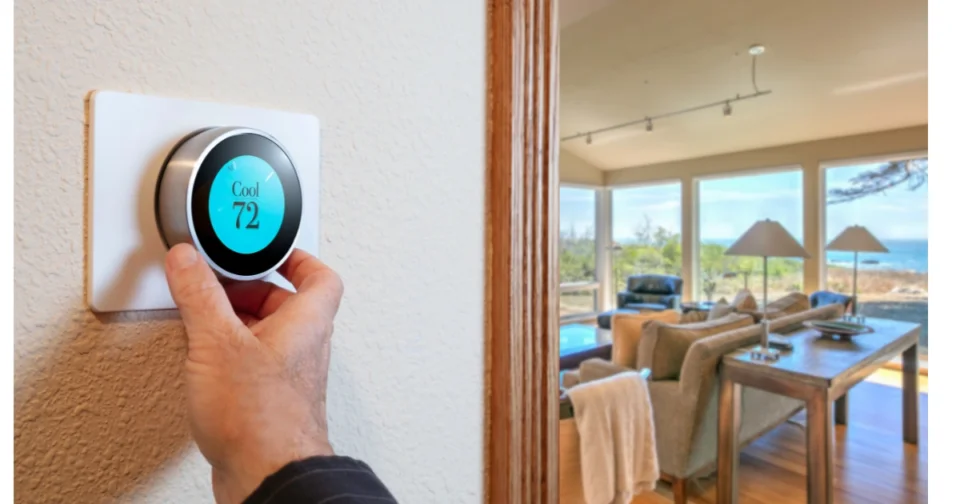
There’s something genuinely luxurious about walking into a perfectly temperature-controlled home without ever touching a dial. Machine learning thermostats eliminate the old cycle of “too hot, too cold, adjust, repeat.” They maintain consistent comfort by understanding that you prefer 72 degrees in the morning but can tolerate 68 degrees while sleeping, or that you like it cooler on sunny afternoons when solar heat gain warms your living room naturally.
3. Environmental Impact Reduction
For eco-conscious homeowners, these devices offer a practical way to reduce carbon footprint without sacrificing comfort. By optimizing when and how heating and cooling systems operate, smart thermostats with machine learning minimize wasted energy. When multiplied across millions of homes, this efficiency translates to significant reductions in power plant emissions and fossil fuel consumption.
4. Extended HVAC Equipment Life
Heating and cooling systems that run more efficiently experience less wear and tear. By reducing unnecessary cycling and preventing systems from working overtime to recover from extreme temperature setbacks, intelligent thermostats help compressors, fans, and heating elements last longer. This means fewer repair bills and delayed replacement costs – often saving homeowners thousands over the lifespan of their HVAC equipment.
Popular Options and What Makes Each Unique
The market for intelligent climate control has expanded rapidly, with several manufacturers offering compelling solutions. Each brand approaches machine learning differently, catering to various homeowner needs and technical comfort levels.
1. Nest Learning Thermostat: The Pioneer
Google’s Nest essentially created the category of smart thermostats with machine learning. Its iconic circular design houses a system that builds a personalized schedule within about a week of installation. The Nest excels at:
- Auto-Schedule: Learning your temperature preferences and building a custom program automatically
- Home/Away Assist: Using phone location and built-in sensors to switch to Eco Temperatures when you’re gone
- Airwave Technology: Running fans after compressors shut off to use remaining cool air in ducts
- System Match: Adapting its algorithms based on whether you have forced air, heat pump, radiant, or other system types
The Nest also integrates deeply with Google Assistant and the broader smart home ecosystem, making it ideal for households already invested in Google technology.
2. Ecobee SmartThermostat: Sensor-Rich Intelligence
Ecobee takes a different approach by emphasizing room-specific comfort through wireless SmartSensors. These small devices placed throughout your home feed occupancy and temperature data back to the main unit, enabling true multi-zone machine learning. Key strengths include:
- Follow Me: Adjusting temperatures based on which rooms are actually occupied rather than just where the thermostat hangs
- Smart Home/Away: Overriding schedules when sensors detect unexpected occupancy or absence
- Alexa Built-In: Serving as a voice control hub even without separate smart speakers
- Eco+: A suite of features including peak electricity pricing awareness and community energy savings events
Ecobee systems particularly shine in larger homes or those with hot/cold spots where single-point temperature measurement falls short.
3. Honeywell Home T9 and T10: Geofencing Leaders
Resideo’s Honeywell Home line emphasizes location-based intelligence through sophisticated geofencing. These thermostats track family members’ smartphone locations to trigger energy-saving modes when everyone leaves and begin pre-conditioning before anyone returns. Notable features include:
- Multi-Room Focus: Using room sensors to prioritize comfort where you actually are
- Smart Response Technology: Learning how long your home takes to reach temperature targets
- Adaptive Recovery: Calculating optimal start times to hit scheduled temperatures precisely
- RedLINK Compatibility: Working with professional-grade HVAC accessories for advanced system control
Honeywell’s approach appeals to homeowners who want reliable automation without extensive manual programming.
4. Emerson Sensi Touch: Budget-Friendly Intelligence
For those wanting machine learning benefits without premium pricing, Emerson’s Sensi line offers solid performance at lower cost. While less flashy than competitors, it delivers:
- Flexible Scheduling: Easy-to-program intelligent schedules that adapt to your life
- Usage Reports: Detailed energy consumption analytics
- Smart Alerts: Notifications for extreme temperature changes or potential equipment problems
- Geofencing: Basic location-based automation via smartphone app
This option proves that smart thermostats with machine learning don’t require massive investment to deliver meaningful benefits.
Installation and Setup: Getting Started Right
While many homeowners successfully self-install these devices, proper setup significantly impacts how well the machine learning algorithms perform. Taking time during initial configuration pays dividends in comfort and savings.
1. Compatibility Checking
Before purchasing, verify that your chosen thermostat works with your existing HVAC system. Most smart thermostats with machine learning support common 24-volt systems (gas, oil, electric furnaces, central air, heat pumps), but compatibility varies with:
- High-voltage systems (baseboard heaters, some radiant systems)
- Millivolt systems (gas fireplaces, wall heaters)
- Proprietary communicating systems (some high-end HVAC brands)
- Multi-stage equipment requiring specific wiring configurations
Manufacturer websites typically offer compatibility checkers where you can verify your system before buying.
2. Wiring and Physical Installation
Basic installation involves removing your old thermostat, connecting labeled wires to corresponding terminals on the new device, and mounting it to the wall. Most manufacturers provide detailed video guides and in-app walkthroughs. However, consider professional installation if:
- Your system uses high voltage (120V or 240V)
- You’re uncomfortable working with electrical components
- Your HVAC system has complex multi-stage or zoning equipment
- You want to add multiple room sensors or integrate with existing smart home infrastructure
3. Optimizing the Learning Period
The first two weeks are crucial for training your thermostat’s algorithms. During this period:
- Adjust manually when uncomfortable: This teaches the system your actual preferences versus assumed defaults
- Maintain consistent routines: Regular wake times, departure schedules, and bedtimes help establish clear patterns
- Enable all sensors and features: Let the system gather comprehensive data about occupancy, humidity, and external conditions
- Avoid “helping” too much: Resist the urge to micromanage; let the algorithm learn from natural behaviors
Most systems display a “learning” indicator during this phase. Once complete, you’ll see increasingly autonomous operation that requires less manual intervention.
Maximizing Your Energy Savings Potential
Owning smart thermostats with machine learning is just the beginning. Implementing these strategies helps extract maximum value from your investment.
1. Understanding and Using Energy Reports
Monthly or weekly energy reports reveal patterns you might miss day-to-day. Look for:
- Peak usage times: Identify when consumption spikes and investigate causes
- Seasonal comparisons: Track how your efficiency improves year-over-year
- Similar home benchmarks: Many systems compare your usage to anonymized data from comparable households
- HVAC runtime hours: Excessive runtime often indicates air leaks, duct issues, or equipment problems
Use these insights to make additional improvements like adding insulation, sealing ductwork, or scheduling maintenance.
2. Leveraging Utility Programs
Many electric and gas utilities offer special rates or rebates for customers using intelligent thermostats. Common programs include:
- Time-of-use optimization: Automatically pre-cooling or pre-heating during cheaper off-peak hours
- Demand response events: Allowing brief, slight temperature adjustments during grid stress in exchange for bill credits
- Rebate programs: Upfront discounts of $50-$150 for purchasing qualifying smart thermostats
- Seasonal savings challenges: Gamified programs that reward reduced consumption during peak months
Check your utility’s website or call customer service to discover available programs in your area.
3. Integrating with Broader Smart Home Ecosystems
Machine learning thermostats become even more powerful when connected to other intelligent devices:
- Smart blinds and shades: Automatically closing south-facing coverings during summer afternoons reduces cooling load
- Ceiling fans: Coordinating air circulation to make moderate temperatures feel comfortable, reducing HVAC runtime
- Air quality monitors: Triggering ventilation or filtration based on detected pollutants
- Weather stations: Hyper-local environmental data for more precise predictive adjustments
- Home security systems: Using door/window sensors to pause climate control when openings are detected
These integrations create a cohesive environment where multiple systems work together toward comfort and efficiency goals.
Common Concerns and How Modern Systems Address Them
Despite growing popularity, some homeowners hesitate to adopt smart thermostats with machine learning due to legitimate concerns. Understanding how current technology addresses these issues helps make informed decisions.
1. Privacy and Data Security
Intelligent thermostats collect detailed information about your daily routines – when you’re home, your preferred temperatures, even which rooms you occupy. Reputable manufacturers implement several protections:
- Data encryption: Both in transit and at rest, preventing interception of sensitive information
- Local processing: Some systems handle machine learning algorithms on-device rather than in the cloud
- Transparent privacy policies: Clear explanations of what data is collected and how it’s used
- User control: Options to disable specific data collection features or delete historical information
- Third-party security audits: Regular testing by independent firms to identify vulnerabilities
If privacy is paramount, look for systems emphasizing local intelligence and minimal cloud dependency.
2. Reliability and “Smart” Failures
What happens when the internet goes down or algorithms make wrong assumptions? Well-designed systems include fail-safes:
- Local operation: Core temperature control functions continue even without internet connectivity
- Manual overrides: Physical controls always available for immediate adjustment
- Conservative defaults: If learning data seems inconsistent, systems revert to energy-efficient baselines rather than extreme settings
- Regular algorithm updates: Manufacturers continuously refine machine learning models based on aggregated performance data
- Professional monitoring options: Some systems alert HVAC contractors to potential equipment issues before complete failures
3. Complexity and Learning Curves
Early smart thermostats sometimes frustrated users with confusing interfaces. Current generations prioritize simplicity:
- Guided setup: Step-by-step app-based configuration requiring minimal technical knowledge
- Intuitive apps: Clean interfaces showing current status, easy adjustments, and clear energy data
- Voice control: Natural language commands through Alexa, Google Assistant, or Siri eliminate menu navigation
- Gradual automation: Systems start with basic scheduling and introduce advanced features as users become comfortable
- Family sharing: Multiple household members can control settings without conflicting changes
Future Trends in AI-Powered Climate Control
The technology behind smart thermostats with machine learning continues evolving rapidly. Several emerging trends promise even greater capabilities in coming years.
1. Predictive Health and Wellness Integration
Next-generation systems may monitor indoor air quality factors affecting health – particulate matter, volatile organic compounds, carbon dioxide levels – and automatically adjust ventilation or filtration. Some researchers are exploring how thermal environments impact sleep quality, with thermostats potentially optimizing bedroom temperatures throughout the night based on sleep stage detection.
2. Grid-Interactive Buildings
As electrical grids incorporate more renewable energy, smart thermostats will play crucial roles in balancing supply and demand. Advanced systems might pre-cool homes when solar generation peaks or temporarily reduce heating during wind lulls, maintaining comfort while supporting grid stability. Some utilities already pilot programs where thousands of thermostats coordinate like a virtual power plant.
3. Enhanced Predictive Maintenance
Machine learning algorithms analyzing vibration patterns, electrical consumption signatures, and thermal performance can increasingly predict HVAC equipment failures before they occur. Future systems might automatically schedule maintenance appointments, order replacement parts, or adjust operation to extend equipment life when degradation is detected.
4. Deeper Personalization Through Biometrics
Experimental systems explore incorporating wearable device data – heart rate, skin temperature, activity levels – to create truly personalized comfort profiles. Your thermostat might learn that you prefer cooler temperatures after workouts or warmer environments during stressful workdays, adjusting automatically based on physiological indicators.
Frequently Asked Questions (FAQ)
You probably have some questions before investing in smart thermostats with machine learning, and that’s completely normal. These devices represent a significant upgrade from traditional temperature controls, so understanding how they work, what to expect, and whether they fit your specific situation matters. Below are answers to the most common questions homeowners ask when considering this technology.
1. How long does it take for a smart thermostat with machine learning to learn my schedule?
Most systems establish basic patterns within one to two weeks of installation. However, the learning process continues refining for several months as seasons change and routines evolve. You’ll notice the biggest improvements during the first month, with gradual enhancements continuing as the algorithm gathers more data about your specific home’s thermal characteristics and your family’s unique behaviors.
2. Can machine learning thermostats work with older HVAC systems?
Generally, yes, provided your system uses standard 24-volt control wiring. Even decades-old furnaces and air conditioners can benefit from intelligent scheduling and occupancy detection. However, very old systems with mercury thermostats or proprietary digital controls may require professional assessment. The machine learning features work regardless of equipment age, though newer high-efficiency systems will show more dramatic savings.
3. Do I need a smart home ecosystem for these thermostats to work effectively?
Not at all. While integration with other smart devices enhances functionality, smart thermostats with machine learning operate independently using their own sensors and algorithms. All core features – adaptive scheduling, occupancy detection, energy reporting, and weather integration – function without additional smart home products. You can always add compatible devices later if desired.
4. Will a machine learning thermostat save money if someone is always home?
Yes, though savings may be more modest than in households with regular away periods. Even constant-occupancy homes benefit from algorithms that optimize temperature curves, reduce overshooting, account for solar gain, and minimize equipment cycling. Additionally, features like humidity control and air circulation management improve comfort efficiency regardless of occupancy patterns.
5. What happens to my settings and learning data if I move?
Most systems allow you to reset learning data and start fresh, which is recommended when moving to a new home with different thermal characteristics. Some manufacturers offer account migration features that preserve basic preferences while clearing location-specific learned behaviors. If selling your home, resetting the device allows new owners to begin their own learning process rather than inheriting your patterns.
Choosing Your Ideal Smart Climate Solution
Selecting the right intelligent thermostat depends on your specific situation, technical comfort level, and home characteristics. Consider these factors when deciding:
- Home Size and Layout: Larger or multi-story homes benefit more from systems with remote room sensors. Compact apartments may find single-point measurement sufficient.
- Existing Smart Home Investments: If you already use Alexa, Google Home, or Apple HomeKit heavily, choosing a compatible thermostat ensures seamless voice control and automation.
- HVAC System Complexity: Homes with heat pumps, dual-fuel systems, or zoning require thermostats specifically designed to handle these configurations.
- Privacy Priorities: Research each manufacturer’s data practices if cloud connectivity and information sharing concern you.
- Budget Constraints: While premium models offer more features, even entry-level smart thermostats with machine learning deliver substantial energy savings compared to conventional programmable units.
- Technical Support Preferences: Some brands emphasize DIY support and community forums, while others partner with professional installers for hands-on assistance.
Reading recent reviews, comparing feature sets, and understanding your utility’s rebate programs helps ensure you select a system that delivers lasting value.
Making the Smart Move to Intelligent Climate Control
Smart thermostats with machine learning represent one of the most accessible and impactful smart home upgrades available today. They combine genuine energy savings with improved daily comfort, all while requiring minimal ongoing effort from homeowners. The technology has matured beyond early-adopter novelty into reliable, mainstream solutions that pay for themselves through reduced utility bills and extended equipment life.
Whether you’re motivated by environmental concerns, financial savings, or simply wanting your home to feel more responsive to your needs, these intelligent devices deliver measurable benefits. The key is choosing a system that matches your home’s requirements, taking time to properly train the algorithms during initial setup, and occasionally reviewing energy reports to identify additional optimization opportunities.
As climate control technology continues advancing, early adopters of machine learning thermostats will find their systems updating and improving automatically, ensuring their investment grows more valuable over time rather than becoming obsolete. The future of home comfort is intelligent, adaptive, and remarkably efficient – and it’s available to install today.