Pollinator-Friendly Flora for Climate Resilient Gardens

Pollinator-friendly flora for climate resilient gardens represents one of the smartest approaches modern gardeners can adopt to support local ecosystems while adapting to increasingly unpredictable weather patterns. As temperatures fluctuate and rainfall becomes more erratic, creating a garden that both feeds bees, butterflies, and hummingbirds and withstands environmental stress has become essential for anyone who cares about biodiversity and sustainable landscaping.
The concept behind pollinator-friendly flora for climate resilient gardens is simple yet powerful: by selecting native plants that have evolved to thrive in your specific region, you create a self-sustaining habitat that requires minimal intervention while providing maximum ecological benefit. These plants have developed deep root systems, drought tolerance, and natural resistance to local pests over thousands of years, making them perfectly suited to handle whatever climate challenges come their way.
Why Climate Resilience Matters for Pollinator Gardens
Climate resilience in gardening isn’t just a trendy buzzword, it’s a practical necessity. According to data from well-known sources, native drought-tolerant plants consistently outperform non-native species in supporting pollinator populations during extreme weather events. Research from UC Davis in 2022 revealed that native species like Blanketflower attract 27% more native bee species compared to non-native plants in drought-affected regions.
When you focus on pollinator-friendly flora for climate resilient gardens, you’re essentially building an insurance policy against climate uncertainty. These plants can handle periods of intense heat, survive unexpected dry spells, and bounce back quickly after heavy rains. More importantly, they provide consistent food sources for pollinators when other plants might fail, ensuring that bees and butterflies have the nectar and pollen they need throughout the growing season.
The key is understanding that climate resilience and pollinator support go hand in hand. Plants that are stressed by heat and drought produce fewer flowers and less nectar. By choosing species naturally adapted to your local conditions, you ensure abundant blooms even when the weather turns challenging.
Top Drought-Tolerant Pollinator Plants for Every Season
Building a truly resilient pollinator garden requires strategic planning for continuous bloom. You want plants that flower at different times, creating a steady buffet for pollinators from early spring through late fall. Here are some standout performers that combine drought tolerance with exceptional pollinator value:
1. Spring Bloomers That Start the Season Strong
Butterfly Weed (Asclepias tuberosa) kicks off the pollinator season with bright orange blooms from May through August. Unlike many milkweeds, this variety doesn’t have the sticky milky sap, making it cleaner to handle while still serving as the exclusive larval host plant for monarch butterflies. It thrives in full sun with dry to medium soil moisture and can tolerate poor soils and drought conditions once established. Standing just 1-2 feet tall, it works perfectly at the front of borders or in rock gardens.
Wild Geranium (Geranium maculatum) offers delicate purple, pink, or white flowers from April through June, attracting bees, butterflies, and flower flies. This shade-tolerant perennial spreads by rhizomes to form attractive colonies without becoming aggressive. It prefers medium moisture but handles drier soils well, making it ideal for woodland gardens and naturalized areas.
Golden Alexander (Zizia aurea) produces cheerful yellow umbels in late spring to early summer. As a member of the carrot family, it’s a larval host plant for black swallowtail butterflies. This adaptable perennial tolerates both clay and sandy soils, wet or dry conditions, and provides excellent ground cover reaching only 1-2 feet tall.
2. Summer Powerhouses for Peak Pollinator Activity
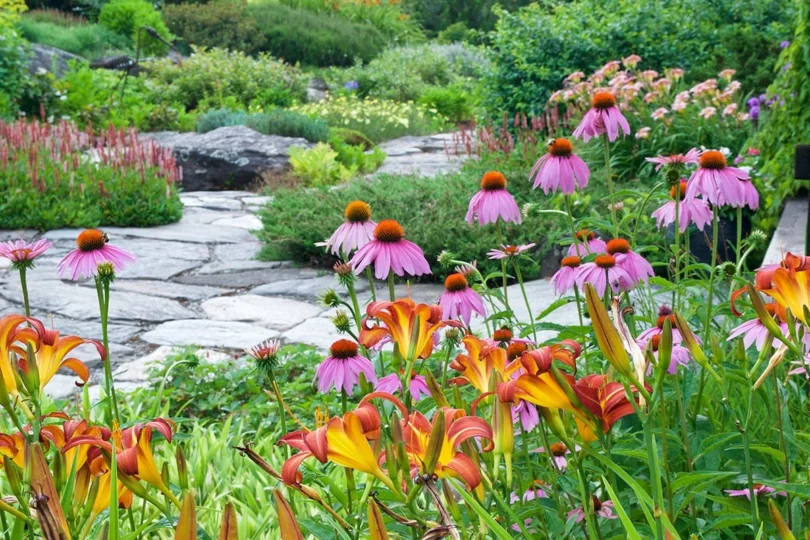
Purple Coneflower (Echinacea purpurea) remains one of the most reliable pollinator magnets available. Its striking pink-purple blooms with spiky centers appear from June through September, feeding bees and butterflies continuously. Once established, this native beauty is remarkably drought tolerant and adaptable to various soil types from sticky clay to sandy soils. The seed heads persist into winter, feeding goldfinches and other songbirds long after the flowers fade.
Blazing Star (Liatris spicata) creates dramatic vertical interest with its tall spikes of purple-pink flowers blooming from the top down, a unique characteristic that sets it apart from most plants. Reaching 3-6 feet tall, it tolerates summer heat and humidity exceptionally well, making it perfect for perennial borders and meadow gardens. Native bees, butterflies, and even goldfinches visiting for seeds make this a multi-season wildlife supporter.
Spotted Beebalm (Monarda punctata) offers something different with its yellow flowers dotted with purple spots. Blooming from June through July, this 2-foot tall perennial thrives in dry soils and full sun. It’s deer and rabbit resistant, attracts numerous native bees, and naturalizes well without becoming aggressive. The aromatic foliage adds sensory interest to the garden.
3. Fall Bloomers for Late-Season Nectar
Aromatic Aster (Symphyotrichum oblongifolium) lives up to its name with fragrant foliage that releases scent when crushed. This tough perennial blooms well into fall with purple, daisy-like flowers that attract bees and butterflies when few other plants are flowering. It’s extremely tolerant of dry soil conditions and adapts to sandy, loam, rocky, or clay soils. Growing 1-3 feet tall, it works beautifully as a ground cover or in mass plantings.
Blue Mistflower (Conoclinium coelestinum) provides crucial late-season support with its feathery purple-blue flowers appearing from late summer through fall. This plant is particularly valuable to late-flying pollinators who swarm it when other nectar sources have disappeared. While it prefers medium moisture, it adapts to various soil types. Note that it spreads through underground rhizomes, so plant it in naturalized areas or containers where it has room to roam.
New England Aster (Symphyotrichum novae-angliae) delivers spectacular purple and yellow blooms from late summer through early fall. These plants are especially important for monarchs during their fall migration and support specialized mining bees in the Andrena genus. They tolerate clay soils, periods of drought once established, and provide seeds for songbirds and small mammals. At 3-6 feet tall, they add impressive height to garden beds.
Native Plants for Specific Garden Conditions
Not every garden has the same growing conditions, and the best pollinator-friendly flora for climate resilient gardens takes this into account. Whether you’re dealing with dry sandy soil, wet clay, full shade, or intense sun, there are native plants perfectly suited to your situation.
1. For Dry, Sandy, or Rocky Soils
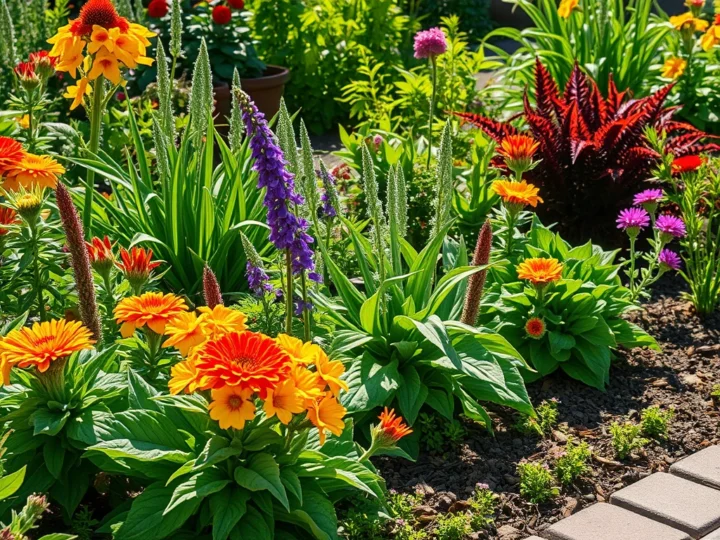
Blanketflower (Gaillardia aristata) thrives in well-draining, sandy, or rocky soils with minimal water once established. Its bold red and yellow flowers bloom from early summer through the first frost, providing months of color and nectar. Research shows this species supports diverse bee populations in arid regions. The gray-green, hairy leaves are naturally drought-resistant, and varieties like ‘Arizona Sun’ and ‘Mesa Yellow’ offer compact options for smaller spaces.
Eastern Prickly Pear (Opuntia humifusa) might surprise you as a pollinator plant, but this native cactus produces yellow flowers in May through July that attract bees, butterflies, and moths. It’s incredibly heat and drought tolerant, growing just 8-12 inches tall but spreading up to 3 feet wide. The pinkish-red fruits that follow the flowers provide additional wildlife food. Handle carefully due to the spines, but don’t overlook this unique addition to rock gardens and dry areas.
Flattop Buckwheat (Eriogonum fasciculatum) is a Southwest native that blooms from March through June, offering early-season nectar when pollinators are emerging from winter dormancy. This plant serves as a host for Acmon Blue and Mormon Metalmark butterflies and draws various bees with its dense flower clusters. Once established, these plants can live 20-30 years with minimal care, making them excellent long-term investments for sustainable gardens.
2. For Moist or Wet Soils
Joe Pye Weed (Eutrochium fistulosum) towers at 5-7 feet tall, making it perfect for adding height to rain gardens and wet meadows. Its pinkish-purple flower clusters appear from July through August, attracting diverse bees and butterflies. The hollow stems provide nesting sites for cavity-nesting bees, and the seeds feed goldfinches, wrens, and titmice in fall. This plant tolerates clay soil and wet conditions beautifully.
Cardinal Flower (Lobelia cardinalis) produces stunning red tubular flowers from July through September that are perfectly designed for hummingbird pollination. While bees struggle to access the deep tubes, butterflies and hummingbirds feast on the nectar. This plant requires consistently moist soil, making it ideal for stream banks, rain gardens, and woodland edges. It tolerates brief flooding and adds vertical interest at 2-4 feet tall.
Blue Vervain (Verbena hastata) reaches 3-6 feet tall with striking blue-violet tubular flowers arranged on spike inflorescences. Blooming from the bottom up, these flowers attract native bees and serve as a larval host plant for common buckeye butterflies. It prefers moist prairies and fields but adapts to various conditions. The seeds feed cardinals and juncos in fall.
3. For Shade Gardens
Bloodroot (Sanguinaria canadensis) is a spring ephemeral that creates beautiful woodland carpets with white flowers wrapped in deeply-lobed leaves. Blooming in early spring, it attracts various bees and other pollinators when few other shade plants are flowering. Ants disperse the seeds, adding ecological interest. This plant prefers moist, well-draining soil in full to partial shade.
Dwarf Crested Iris (Iris cristata) grows only 4-9 inches tall but produces surprisingly large purple, blue, or white flowers with yellow crests in late spring. It spreads by rhizomes to form excellent ground cover in woodland gardens and shade gardens. Hummingbirds and bees visit the blooms, and it’s deer resistant to boot.
White Snakeroot (Eupatorium rugosum) provides late-season white flowers from late summer through fall, attracting small bees and butterflies to shady areas. It serves as a host plant for six species of moths and butterflies and feeds songbirds with its seeds. This plant prefers moist, well-draining soils in partial shade but tolerates brief dry spells and full sun.
Design Strategies for Maximum Climate Resilience
Creating a successful pollinator-friendly flora for climate resilient gardens requires more than just planting a random assortment of native flowers. Strategic design principles ensure your garden remains productive and beautiful even during extreme weather events.
1. Layered Planting for Stability
Think of your garden in layers, similar to natural ecosystems. Start with ground covers like Wild Geranium or Dwarf Crested Iris that protect soil moisture and prevent erosion. Add mid-level plants such as Butterfly Weed and Purple Coneflower that form the backbone of your pollinator support. Top it off with vertical accents like Blazing Star, Joe Pye Weed, or Cutleaf Coneflower that reach 3-10 feet tall and create visual interest while providing diverse feeding heights for different pollinator species.
This layered approach creates microclimates within your garden. Lower plants shade the soil, reducing evaporation and keeping roots cool. Taller plants provide wind protection and create humid pockets that benefit understory species. When one layer struggles during extreme weather, others continue thriving, ensuring continuous pollinator support.
2. Staggered Bloom Cycles
The most effective pollinator gardens never have a gap in flowering. Map out your plant selections by bloom time to ensure something is always producing nectar and pollen. Early spring ephemerals like Bloodroot give way to late spring performers like Golden Alexander. Summer brings the main show with Purple Coneflower, Blazing Star, and Butterfly Weed. Fall asters and mistflowers close the season, supporting migrating monarchs and late-emerging bumblebee queens preparing for winter.
According to experts, gardens with staggered bloom cycles support 40% more pollinator species than those with single-season flowering. This continuous food source is especially crucial as climate change shifts traditional bloom times and creates mismatches between pollinator emergence and flower availability.
3. Soil Health as Foundation
Even the most drought-tolerant plants need help establishing strong root systems. Before planting, focus on building soil organic matter through compost additions. Healthy soil acts like a sponge, holding moisture during dry periods and draining excess during heavy rains. This buffer protects plants from the extreme fluctuations that characterize modern weather patterns.
Mulching with organic materials such as shredded leaves or untreated wood chips further stabilizes soil conditions. A 2-3 inch layer reduces evaporation, moderates soil temperature, and slowly adds nutrients as it decomposes. Avoid rock mulches in sunny areas, as they create heat islands that stress plants and pollinators alike.
Supporting Pollinators Beyond Flowers
While nectar and pollen sources form the foundation of pollinator support, truly climate-resilient gardens address all aspects of pollinator life cycles. Many native plants serve dual purposes as larval host plants, providing food for caterpillars that will become the next generation of butterflies and moths.
1. Host Plants for Butterfly Conservation
Milkweeds (Asclepias species) are perhaps the most critical host plants, as they’re the only food source for monarch butterfly caterpillars. Butterfly Weed, Whorled Milkweed, and other native varieties should be included in every pollinator garden. Unlike non-native tropical milkweeds, native species die back in winter, preventing disease buildup and supporting natural monarch migration patterns.
Golden Alexander hosts black swallowtail caterpillars, while asters of various species support pearl crescent and checkerspot butterflies. Joe Pye Weed and Blazing Star host multiple moth species that serve as essential food for nesting birds. By including these host plants, you ensure your garden supports complete life cycles, not just adult feeding.
2. Nesting and Overwintering Habitat
Climate resilience also means providing shelter during extreme weather. Leave standing dead stems of plants like Joe Pye Weed and Blazing Star through winter, these hollow stems serve as nesting sites for solitary bees. Leaf litter in garden beds protects overwintering butterflies and beneficial insects from temperature extremes. Resist the urge to “clean up” your garden in fall; the messier it looks to humans, the more valuable it is to wildlife.
Consider adding bare patches of soil in sunny locations for ground-nesting bees, which make up 70% of native bee species. These areas should remain undisturbed and unmulched to provide access for tunneling.
Maintenance Tips for Long-Term Success
Once established, pollinator-friendly flora for climate resilient gardens requires minimal maintenance compared to traditional ornamental gardens. However, a few key practices ensure continued health and productivity.
1. Watering Wisely
Even drought-tolerant plants need consistent moisture during their first growing season to establish deep root systems. Water deeply but infrequently, encouraging roots to grow downward in search of moisture rather than staying shallow. Once established, most native plants survive on rainfall alone, though they may bloom more profusely with occasional deep watering during extended droughts.
2. Deadheading and Division
Removing spent flowers on plants like Blanketflower and Maryland Aster extends the blooming season and prevents excessive self-seeding. However, leave some seed heads intact to feed birds and allow natural reseeding where desired. Divide aggressive spreaders like Blue Mistflower and Obedient Plant every few years to maintain control, or plant them in areas where they can spread naturally.
3. Avoiding Chemical Inputs
Native plants evolved without synthetic fertilizers and pesticides, and they generally perform better without them. Chemical fertilizers promote lush, weak growth that’s more susceptible to drought and pests. Pesticides, even organic ones, harm beneficial insects including pollinators. If pest problems arise, they usually indicate an imbalance that resolves itself as the garden matures and natural predator populations establish.
Frequently Asked Questions (FAQ)
Creating a pollinator-friendly flora for climate resilient gardens often raises practical questions about implementation, maintenance, and results. Whether you’re a beginner wondering where to start or an experienced gardener looking to optimize your existing space, these common concerns cover the essential information you need to succeed with native plant gardening in changing climate conditions.
1. What makes a plant “climate resilient”?
Climate resilient plants possess deep root systems that access water during drought, tolerance to temperature extremes, and natural resistance to local pests and diseases. Native plants are inherently climate resilient because they’ve adapted to regional weather patterns over thousands of years. They can survive erratic rainfall, heat waves, and unexpected cold snaps that would damage non-native species.
2. How do I start converting my existing garden to a pollinator-friendly space?
Start by assessing your current conditions, sun exposure, soil type, and moisture levels. Remove invasive species and lawn areas gradually, replacing them with native plants suited to your specific conditions. Begin with a small section rather than the entire yard, allowing you to learn what works best in your space. Many gardeners find success starting with a “pollinator patch” of 100-200 square feet, then expanding as they gain confidence.
3. Can climate resilient gardens look attractive to neighbors?
Absolutely! Modern native plant gardening has moved far beyond the “wild mess” stereotype. By using design principles like repetition, color coordination, and structured borders, native gardens can look intentional and beautiful. Plants like Purple Coneflower, Blazing Star, and Aromatic Aster provide showy blooms that rival any ornamental. Adding defined paths, decorative borders, or a bench creates a garden room feel that appeals to human visitors while supporting wildlife.
4. Do I need to live in a rural area to have a successful pollinator garden?
Not at all. Urban and suburban gardens often provide crucial pollinator habitat in areas where natural spaces have been lost. Even small spaces, balconies, patios, or postage-stamp yards, can support pollinators with container plantings of native species like Butterfly Weed, Spotted Beebalm, or compact Blanketflower varieties. The key is using native plants regardless of garden size.
5. How long until my garden becomes self-sustaining?
Most native plant gardens begin functioning as mini-ecosystems within two to three growing seasons. The first year, plants focus on root development with minimal top growth. By year two, you’ll see fuller plants and more flowers. Year three typically brings the explosion of growth and pollinator activity that makes native gardens so rewarding. Once established, these gardens require less water, less fertilizer, and less maintenance than traditional landscapes while providing exponentially more ecological value.
6. Will native plants attract pests to my home?
Native plants actually reduce pest problems by supporting balanced ecosystems. While they may host caterpillars (which are baby butterflies and moths), these rarely cause significant plant damage and serve as crucial food for birds. Native plants also attract predatory insects that control true pests like aphids and mosquitoes. Any minor leaf damage from native insects is a small price to pay for the biodiversity benefits.
Creating Your Climate Smart Pollinator Paradise
Building a garden around pollinator-friendly flora for climate resilient gardens is one of the most impactful actions you can take for local biodiversity while creating a beautiful, low-maintenance landscape. By choosing native plants adapted to your specific conditions, you create a self-sustaining ecosystem that supports bees, butterflies, hummingbirds, and countless other species through increasingly unpredictable weather patterns.
The beauty of this approach lies in its simplicity: work with nature rather than against it. Select plants that evolved in your region, group them by water needs, and let them establish naturally. The result is a garden that requires less work, less water, and fewer inputs while providing more beauty and ecological value than traditional landscapes could ever offer.
Start small if needed, but start somewhere. Every native plant you add contributes to a network of habitat that helps pollinators navigate increasingly fragmented landscapes. Your climate resilient pollinator garden becomes part of a larger solution, connecting green spaces and ensuring that essential pollinator populations survive and thrive despite climate challenges. The future of gardening is native, resilient, and buzzing with life, plant your piece of it today.