Mycelium Packaging as a Plastic Alternative

The search for mycelium packaging as a plastic alternative has exploded in recent years, and for good reason. With mountains of plastic waste choking our oceans and landfills, businesses and consumers alike are desperate for packaging solutions that don’t destroy the planet. Enter mycelium, the root structure of mushrooms, which is rapidly becoming one of the most promising materials in the sustainable packaging revolution. This remarkable natural resource isn’t just biodegradable; it’s home-compostable, requires minimal energy to produce, and can be grown into virtually any shape. Whether you’re an e-commerce seller tired of styrofoam guilt or a manufacturer looking to green your supply chain, understanding how mushroom-based packaging works could transform your environmental impact while potentially boosting your bottom line.
What Exactly Is Mycelium Packaging?
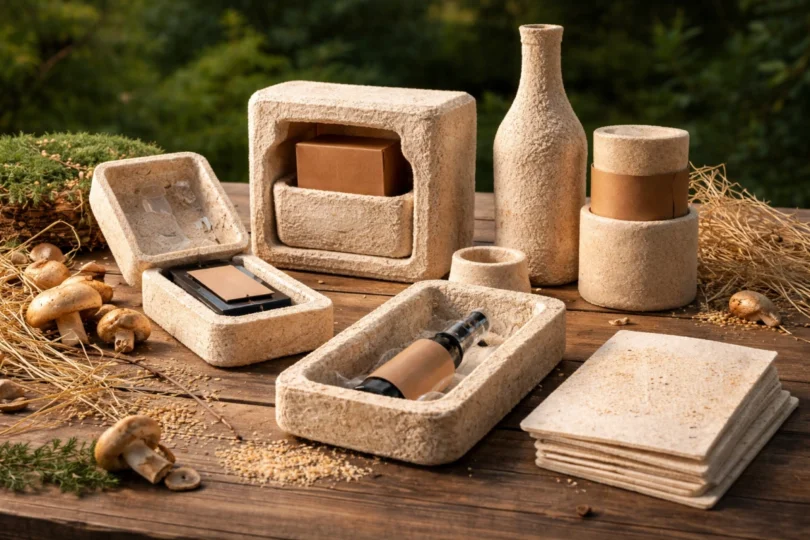
Mycelium packaging as a plastic alternative starts with something surprisingly simple: agricultural waste and mushroom roots. Manufacturers combine leftover corn stalks, hemp hurds, or sawdust with live mycelium cells, the vegetative part of fungi that usually lives underground. Think of mycelium as nature’s glue. It grows through the agricultural waste over several days, binding everything together into a solid, lightweight material that can be molded into protective packaging shapes.
The process feels almost magical. Once the mycelium has fully colonized the substrate (that’s the fancy word for the agricultural waste mixture), manufacturers heat-treat the material to stop growth and kill spores. What remains is a sturdy, foam-like substance that performs remarkably similarly to polystyrene foam, without the eternal environmental hangover. You can drop it, compress it, or use it to cushion fragile items during shipping, just like traditional plastic packaging.
What makes this material truly special is its end-of-life story. Unlike plastic that persists for centuries, mycelium packaging breaks down completely in your backyard compost within 45 days. No industrial composting facility required. No microplastics left behind. Just rich organic matter that feeds your garden soil. This complete circularity represents exactly what sustainable packaging should look like in the 21st century.
Why Traditional Plastic Packaging Is Failing Us
We’ve relied on plastic packaging for roughly 70 years, and the environmental bill has finally come due. Expanded polystyrene, those white foam blocks we call Styrofoam, takes over 500 years to decompose. During that half-millennium, it breaks into smaller and smaller pieces, eventually becoming microplastics that infiltrate our food chain, water supplies, and even human bloodstreams. Recent studies have detected microplastics in human lungs, blood, and placentas, raising serious health concerns we’re only beginning to understand.
The production side is equally troubling. Manufacturing plastic packaging consumes massive amounts of petroleum, releasing greenhouse gases and toxic chemicals throughout the process. Recycling rates remain embarrassingly low, only about 9% of all plastic ever produced has actually been recycled. The rest sits in landfills, burns in incinerators, or floats in our oceans. Eight million metric tons of plastic enter our oceans annually, creating garbage patches so large they’re visible from space.
Consumer awareness has shifted dramatically. People increasingly refuse to buy from companies using excessive plastic packaging. Social media amplifies “unboxing shame” when products arrive wrapped in layers of unnecessary plastic. Regulatory pressure is mounting too, cities and countries worldwide are banning single-use plastics and foam packaging. California, New York, and numerous other jurisdictions have already prohibited expanded polystyrene food containers and packaging materials. Businesses sticking with plastic face both reputational damage and legal restrictions that grow stricter each year.
How Mycelium Packaging Actually Performs
Skeptics naturally wonder whether mycelium packaging as a plastic alternative can truly match plastic’s protective capabilities. The short answer? It performs impressively well in most applications. Independent testing shows mycelium-based materials provide comparable cushioning and impact absorption to expanded polystyrene foam. Drop tests with fragile electronics, glassware, and ceramics demonstrate excellent shock absorption, often outperforming traditional foam in vibration dampening.
The material naturally resists fire without chemical additives, a significant safety advantage over petroleum-based foams. It also boasts excellent insulation properties, making it ideal for temperature-sensitive shipments. Mycelium packaging maintains structural integrity across a wide temperature range, from freezer conditions up to 200°F, though prolonged exposure to extreme moisture can compromise performance.
Water resistance presents both challenges and solutions. Untreated mycelium absorbs moisture, which can be problematic for certain applications. However, manufacturers have developed natural wax coatings derived from plants that create water-resistant barriers without sacrificing compostability. These innovations mean mycelium packaging now protects everything from fresh produce to electronics during humid shipping conditions.
Weight considerations matter for shipping costs. Mycelium packaging typically weighs slightly more than equivalent polystyrene volumes, but the difference is minimal, usually 10-20% heavier. For most shippers, this slight weight increase is offset by marketing advantages, customer satisfaction, and avoiding plastic taxes or fees increasingly common in European markets.
The Growing Business Case for Switching
Transitioning to mycelium packaging as a plastic alternative isn’t just environmental virtue signaling, it’s increasingly smart business. Major corporations have already made significant commitments. Dell Technologies began shipping high-end servers in mycelium packaging back in 2011, replacing tons of foam annually. IKEA announced plans to phase out all petroleum-based packaging materials, specifically citing mycelium as a key replacement technology. Luxury brands like Stella McCartney and Lush Cosmetics use mushroom-based materials for premium product packaging, charging premium prices while reducing environmental impact.
Cost parity is approaching faster than most anticipated. While mycelium packaging initially cost 2-3 times more than polystyrene, scaling production and automated growing systems have narrowed this gap significantly. For many applications, mycelium packaging now costs only 10-30% more than plastic alternatives. When factoring in potential plastic taxes, brand value enhancement, and customer acquisition benefits, the total cost of ownership often favors sustainable materials.
Marketing advantages prove substantial. Unboxing experiences featuring mycelium packaging generate organic social media sharing, customers love photographing and sharing “mushroom packaging” arrivals. This user-generated content provides free marketing while positioning brands as sustainability leaders. E-commerce sellers report higher customer satisfaction scores and repeat purchase rates after switching to compostable packaging, suggesting the investment pays dividends beyond environmental metrics.
Supply chain resilience matters too. Mycelium production relies on agricultural waste streams, materials often sourced locally rather than petroleum subject to volatile global commodity markets. Domestic production capabilities reduce dependence on overseas plastic manufacturing and mitigate shipping disruptions that plagued global supply chains during recent years.
Leading Companies and Innovations
Several pioneering companies have transformed mycelium packaging as a plastic alternative from laboratory curiosity to commercial reality. Ecovative Design stands as the industry pioneer, developing the original technology and licensing it to manufacturers worldwide. Their Mushroom Packaging brand has protected millions of products across electronics, furniture, and consumer goods sectors. The company continues innovating, recently announcing faster-growing strains that reduce production time from seven days to just four.
Grown.bio operates major production facilities in Europe and North America, offering custom-molded mycelium packaging solutions for businesses of all sizes. They specialize in complex geometries and high-volume orders, serving clients from small Etsy sellers to Fortune 500 companies. Their recent expansion into Asia-Pacific markets signals growing global demand.
Sealed Air Corporation, the packaging giant behind Bubble Wrap, has invested heavily in mycelium technology, recognizing the inevitable shift away from petroleum-based materials. Their industrial-scale production capabilities bring mushroom packaging to mainstream markets previously served exclusively by plastic foams.
Innovation continues accelerating. Researchers are developing mycelium-leather composites for luxury goods packaging, combining the material’s protective qualities with aesthetic appeal. Edible mycelium packaging variants are emerging for food applications, though regulatory approval remains pending in most jurisdictions. Some startups experiment with embedding seeds into mycelium packaging, so customers can literally plant their box protectors and grow flowers or herbs, turning waste into gardens.
Practical Implementation for Your Business
Switching to mycelium packaging as a plastic alternative requires thoughtful planning but proves surprisingly straightforward. Start by auditing your current packaging usage, identify which products use expanded polystyrene, plastic inserts, or other petroleum-based protective materials. Measure dimensions and quantities to determine exact specifications needed.
Contact mycelium packaging suppliers for samples and quotes. Most manufacturers offer free sample kits allowing you to test fit, protection levels, and customer reactions before committing to large orders. Test thoroughly with your actual products, simulating real shipping conditions including drops, compression, and humidity exposure.
Consider hybrid approaches during transition periods. You might switch fragile electronics to mycelium while keeping simpler items in recycled cardboard initially. This phased approach spreads costs and allows operational learning without overwhelming your fulfillment team.
Educate customers proactively. Include simple disposal instructions, ” compost this package” or “break into garden soil”, on inserts or printed directly on the packaging. Many consumers remain unfamiliar with mycelium materials, so clear guidance prevents confusion and ensures proper disposal. Share your sustainability story through marketing channels; customers want to know about your environmental commitments.
Evaluate total costs beyond per-unit pricing. Factor in potential marketing benefits, customer retention improvements, and regulatory compliance advantages. Calculate break-even points considering these broader business impacts rather than comparing only material costs.
Challenges and Limitations to Consider
Despite its promise, mycelium packaging as a plastic alternative faces real constraints. Production capacity, while growing rapidly, still lags behind global plastic foam manufacturing. High-volume shippers may encounter supply limitations or longer lead times, particularly during peak seasons. Planning orders well in advance becomes essential.
Moisture sensitivity requires careful handling during storage. Mycelium packaging stored in damp warehouses can begin degrading prematurely or develop mold if not properly dried and sealed. Climate-controlled storage extends shelf life significantly, but this adds logistical complexity compared to plastic’s indefinite stability.
Customization options remain somewhat limited compared to plastic. While mycelium can be grown into countless shapes, achieving ultra-fine details or extremely thin walls proves challenging. Highly complex packaging designs may require hybrid solutions combining mycelium with other sustainable materials.
Color and aesthetic options are currently restricted. Natural mycelium presents earthy brown tones, attractive for eco-conscious brands but potentially mismatched for certain luxury or high-tech aesthetics. Some manufacturers offer natural dyes, but the palette remains narrower than plastic’s unlimited color possibilities.
Cost premiums persist for small orders. While large-volume pricing approaches parity with plastic, businesses ordering limited quantities may face significant per-unit premiums. Minimum order quantities from some suppliers exclude very small businesses, though this is changing as the industry matures.
The Future of Mycelium in Packaging
The trajectory for mycelium packaging as a plastic alternative points strongly upward. Market analysts project the mushroom packaging sector will grow from approximately $100 million annually to over $3 billion by 2030. This explosive growth reflects both technological maturation and accelerating regulatory pressure on plastic alternatives.
Research investments are unlocking new capabilities. Scientists engineer mycelium strains with enhanced water resistance, faster growth rates, and improved mechanical properties. Biotech advances may eventually produce mycelium materials with programmable characteristics, packaging that changes color to indicate temperature breaches or built-in antimicrobial properties for food applications.
Integration with circular economy systems is deepening. Some companies experiment with take-back programs where used mycelium packaging returns to manufacturing facilities for reprocessing into new products. Others partner with composting networks to ensure proper end-of-life processing at scale.
Cross-industry collaboration is expanding. Automotive companies explore mycelium for vehicle interior components, which could eventually feed packaging waste streams back into durable goods manufacturing. Construction applications for insulation and building materials create additional demand that drives production scaling and cost reductions benefiting packaging markets.
Consumer education is improving rapidly. As major brands adopt mycelium packaging, public familiarity increases dramatically. What seemed exotic five years ago is becoming mainstream recognition. This cultural shift reduces education burdens for adopting businesses and increases customer appreciation for mushroom-based materials.
Frequently Asked Questions (FAQ)
People have lots of questions when they first encounter mushroom-based packaging materials. Here are the most common inquiries businesses and consumers ask about making the switch.
1. Does mycelium packaging smell like mushrooms?
Not at all. The manufacturing process completely eliminates any fungal odors. Finished mycelium packaging is entirely odorless, making it suitable for food, cosmetics, and sensitive electronics without risk of scent transfer.
2. How long does mycelium packaging last before decomposing?
When kept dry, mycelium packaging remains stable for years. It only begins breaking down when exposed to moisture and soil microorganisms. Store it in normal warehouse conditions, and it performs identically to plastic foam for indefinite periods.
3. Is mycelium packaging safe for food contact?
Yes, properly processed mycelium packaging meets FDA and EU food contact material regulations. The heat treatment process eliminates all living organisms, leaving an inert, safe material suitable for direct food packaging applications.
4. Can I recycle mycelium packaging with cardboard?
While technically possible, composting is the preferred disposal method. Mycelium packaging contaminates paper recycling streams, so home composting or industrial composting facilities represent the proper end-of-life pathways.
5. Does mycelium packaging cost more than plastic?
Currently, yes, typically 10-30% more depending on volume and specifications. However, costs continue falling as production scales, and many businesses find the marketing and customer loyalty benefits offset the modest premium.
7. What happens if mycelium packaging gets wet during shipping?
Light moisture exposure doesn’t immediately destroy the material. While prolonged soaking compromises structural integrity, brief exposure to rain or humidity during transit typically doesn’t affect protective performance. Water-resistant coatings are available for extremely wet applications.
8. Can mycelium packaging support heavy items?
Absolutely. Engineered properly, mycelium packaging supports substantial weight. Manufacturers create high-density variants specifically for heavy industrial equipment, with load-bearing capacities matching or exceeding polystyrene alternatives.
9. Is mycelium packaging fire-resistant?
Yes, naturally. Mycelium contains natural fire-resistant compounds and self-extinguishes when ignition sources are removed. This exceeds polystyrene’s fire performance without requiring chemical flame retardants.
10. How quickly can suppliers fulfill large orders?
Production times vary by supplier and order size, but typical lead times range from 4-8 weeks for custom-molded items. Growing mycelium simply takes time, it can’t be rushed like plastic injection molding. Planning ahead is essential.
11. Will mycelium packaging replace all plastic packaging?
Probably not entirely, at least not soon. Certain applications requiring extreme moisture resistance, transparency, or ultra-lightweight properties may continue using plastic or other materials. However, mycelium will likely capture the majority of protective packaging markets currently served by expanded polystyrene.
The Bottom Line on Mushroom-Based Packaging
Mycelium packaging as a plastic alternative represents far more than a niche eco-friendly option, it signals a fundamental shift in how we approach product protection and shipping logistics. As production scales, costs normalize, and consumer expectations evolve, mushroom-based materials are positioning themselves as the default choice for responsible businesses worldwide. The technology has matured from experimental concept to proven commercial solution, protecting everything from delicate electronics to furniture for major global brands. While challenges around moisture sensitivity and production capacity remain, the trajectory is unmistakably positive. For businesses looking to reduce environmental impact while meeting increasingly strict regulations and consumer demands, mycelium packaging offers a rare combination of performance, sustainability, and marketing appeal. The question is no longer whether mushroom packaging will replace plastic foam, but how quickly businesses can make the transition to stay competitive in a world that increasingly rejects petroleum-based waste.