Invertebrate That Makes Up Coral: The Tiny Animal Behind Reef Ecosystems

The invertebrate that makes up coral is called the coral polyp, a fascinating soft-bodied animal that creates the largest biological structures on Earth. These tiny creatures, belonging to the phylum Cnidaria, work together in massive colonies to build the colorful reef structures that support approximately 25 percent of all marine life while covering less than 1 percent of the ocean floor .
What Is the Invertebrate That Makes Up Coral
The invertebrate that makes up coral is a small cylindrical animal related to jellyfish and sea anemones. Each coral polyp is essentially a sac-like creature with a simple body plan: a single opening that serves as both mouth and anus, surrounded by a ring of tentacles armed with stinging cells . These tentacles contain specialized cells called nematocysts that help capture prey and defend against predators .
Individual coral polyps are remarkably small, typically measuring just a few millimeters in diameter, though some species can reach up to 12 inches . Despite their tiny size, these invertebrates possess a complete digestive system within their stomach cavity. Food enters through the mouth, gets processed for nutrients, and waste exits back through the same opening since the polyp has only one body opening .
The invertebrate that makes up coral lives a sessile lifestyle, meaning it remains permanently attached to a hard surface. Once a coral polyp larva finds suitable substrate and settles down, it never moves again, spending its entire life fixed in place while building the limestone foundation that becomes coral reef structure .
How the Invertebrate That Makes Up Coral Builds Reefs
The invertebrate that makes up coral creates reef structures through an incredible biological process involving calcium carbonate secretion. Hard coral polyps extract calcium and carbonate ions from seawater and combine them to form calcium carbonate, also known as limestone . This mineral forms a hard outer skeleton called a calicle that protects the soft polyp body .
As the invertebrate that makes up coral grows, it continuously adds layers to its limestone skeleton. When polyps reproduce through budding, they create genetically identical clones that remain connected to the parent polyp. These connections form massive colonies where thousands of polyps share nutrients and build collective skeletons . Over time, as generations of polyps live, reproduce, and die, they leave behind their limestone skeletons. New polyps build on top of these remains, creating layer upon layer of calcium carbonate structure .
Some coral reefs on Earth today began growing over 50 million years ago . The Great Barrier Reef, built entirely by the invertebrate that makes up coral, stretches over 1,400 miles and represents the largest structure ever created by living organisms . This demonstrates how these tiny animals, working together across millennia, can construct geological features visible from space.
Types of the Invertebrate That Makes Up Coral
Scientists classify the invertebrate that makes up coral into two main categories based on their skeleton structure and reef-building capabilities.
1. Hard Coral Polyps
Hard corals, also called stony corals or scleractinians, are the primary reef-builders. The invertebrate that makes up coral in this category secretes rigid calcium carbonate skeletons that form the solid foundation of coral reefs . Hard coral polyps typically have six tentacles arranged around their mouth opening .
Common growth forms of hard coral include massive boulder corals that withstand powerful storms, branching corals like elkhorn and staghorn that provide shelter for fish, and encrusting corals that spread across surfaces . Approximately 800 known species of hard coral exist worldwide, and they create the three-dimensional reef habitat that supports thousands of other marine species .
2. Soft Coral Polyps
Soft corals represent the second type of invertebrate that makes up coral, though they do not build reef structures. These polyps have eight feathery tentacles and produce a flexible skeleton made of protein called gorgonin rather than hard limestone . Soft corals often resemble underwater plants, appearing as fans, whips, or bushy colonies that sway with ocean currents .
While soft corals do not contribute to reef framework construction, they add important biodiversity to reef ecosystems. Species like sea fans and sea feathers provide additional habitat complexity and serve as indicators of reef health .
The Symbiotic Partnership of the Invertebrate That Makes Up Coral
The invertebrate that makes up coral maintains one of nature’s most important mutualistic relationships. Within the tissues of coral polyps live microscopic algae called zooxanthellae, which provide up to 90 percent of the coral’s nutrition through photosynthesis . These algae convert sunlight into energy-rich compounds that feed the polyp, while the coral provides the algae with shelter and essential nutrients .
This partnership explains why the invertebrate that makes up coral thrives primarily in shallow, clear tropical waters where sunlight penetrates effectively. The algae give corals their characteristic bright colors, as the polyp itself is actually translucent . When environmental stressors like temperature changes or pollution occur, corals may expel their zooxanthellae, causing the white appearance known as coral bleaching .
Recent research from the National Institutes of Health reveals that this symbiosis involves complex cellular processes including recognition, phagocytosis, and metabolic exchange. The algae enhance the invertebrate that makes up coral’s ability to produce its calcium carbonate skeleton through a process called light-enhanced calcification, where photosynthesis directly supports reef building .
Reproduction and Colony Formation
The invertebrate that makes up coral reproduces through multiple strategies that ensure colony growth and genetic diversity. Asexual reproduction occurs through budding, where a polyp divides to create genetically identical clones. This process allows a single polyp to multiply into a colony of 25,000 polyps within just three years . Coral colonies can also reproduce through fragmentation, where broken pieces develop into new colonies .
Sexual reproduction happens through spawning events where corals release eggs and sperm into the water column. Fertilized eggs develop into free-swimming larvae called planulae that drift on ocean currents for days or even months before settling on suitable substrate . Once a larva attaches to a hard surface, it metamorphoses into a polyp and begins secreting its calcium carbonate skeleton, starting the reef-building process anew .
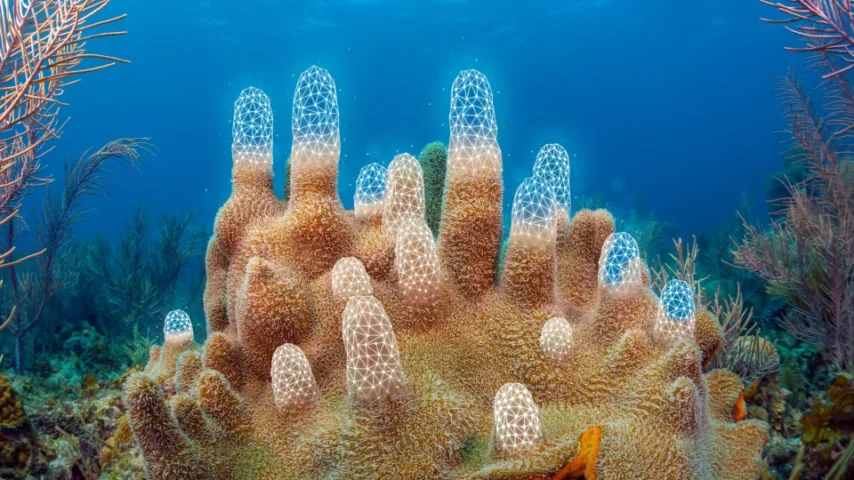
Colonies of the invertebrate that makes up coral display various architectural patterns. Some corals form separate cup-like structures called corallites, while others create shared walls between polyps forming valleys and ridges. These growth patterns create the diverse shapes we recognize as brain coral, staghorn coral, table coral, and pillar coral .
Ecological Importance of the Invertebrate That Makes Up Coral
The invertebrate that makes up coral creates ecosystems of extraordinary biodiversity. Coral reefs support over 4,000 fish species and provide habitat for countless invertebrates including sponges, shrimp, crabs, lobsters, and sea turtles . These reef structures protect coastlines from storm surges and erosion, support fisheries that feed millions of people, and generate billions of dollars in tourism revenue annually .
Invertebrates associated with coral reefs play crucial supporting roles. Sea cucumbers recycle nutrients by breaking down organic matter in the sand. Giant clams filter thousands of liters of water daily while storing zooxanthellae that can help reefs recover from bleaching events. Cleaner shrimp establish stations where fish line up to have parasites removed .
The invertebrate that makes up coral essentially constructs underwater cities that support approximately one-quarter of all marine species. This remarkable engineering feat, accomplished by animals barely visible to the naked eye, demonstrates how small organisms can create impacts of global significance when working together across evolutionary time scales.
Threats Facing the Invertebrate That Makes Up Coral
Human activities pose severe threats to the invertebrate that makes up coral and the reefs they construct. Climate change causes ocean warming that triggers mass bleaching events, where corals expel their symbiotic algae and starve. Ocean acidification reduces the availability of carbonate ions, making it harder for polyps to build their calcium carbonate skeletons .
Pollution from agricultural runoff, sewage discharge, and plastic waste damages coral tissue and promotes harmful algal growth. Overfishing removes species that help maintain reef balance, while destructive fishing practices like blast fishing physically destroy coral structures. Sedimentation from coastal development smothers polyps and blocks the sunlight their algae need for photosynthesis .
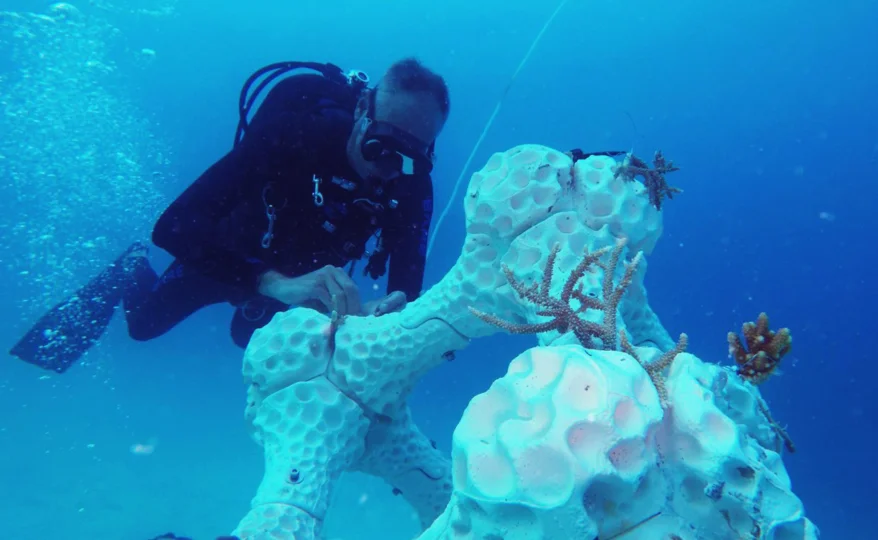
Scientists estimate that human factors threaten large portions of the world’s coral reefs, with some regions experiencing over 50 percent coral mortality in recent decades. Conservation efforts focus on reducing carbon emissions, establishing marine protected areas, and developing coral restoration techniques to help the invertebrate that makes up coral recover from these pressures.
Frequently Asked Questions (FAQ)
Many people have questions about the invertebrate that makes up coral and how these tiny creatures create such massive reef structures. Below are answers to some of the most common questions about coral polyp biology, reef formation, and conservation.
1. Is the invertebrate that makes up coral actually an animal or a plant?
The invertebrate that makes up coral is definitely an animal, not a plant or mineral. Corals belong to the kingdom Animalia and are closely related to jellyfish and sea anemones within the phylum Cnidaria . While they contain plant-like algae in their tissues and often resemble underwater gardens, the coral polyp itself is a living animal that captures prey with stinging tentacles and digests food in a stomach cavity .
2. How big can the invertebrate that makes up coral grow?
Individual coral polyps remain tiny, usually just a few millimeters in diameter . However, the colonies they form can become absolutely massive. The Great Barrier Reef, built entirely by the invertebrate that makes up coral, extends over 1,400 miles and represents the largest biological structure on Earth . Some individual coral colonies have been growing for centuries and weigh several tons .
3. Why is the invertebrate that makes up coral colorful?
The vibrant colors of coral come from the zooxanthellae algae living within the polyp tissues, not from the polyp itself which is actually clear and translucent . Different types of algae and varying pigment concentrations create the rainbow of colors seen on healthy reefs. When stressed corals expel their algae during bleaching events, the white calcium carbonate skeleton becomes visible, giving bleached coral its pale appearance .
4. Can the invertebrate that makes up coral survive without its algae?
The invertebrate that makes up coral can survive temporarily without its symbiotic algae, but long-term survival becomes difficult. Corals obtain up to 90 percent of their nutrition from these algae through photosynthesis . While polyps can capture zooplankton and small fish with their tentacles at night, this feeding method alone cannot typically sustain large colonies. Extended bleaching events where algae remain expelled usually result in coral starvation and death .
5. How does the invertebrate that makes up coral reproduce?
The invertebrate that makes up coral reproduces both sexually and asexually. Sexual reproduction involves releasing eggs and sperm into the water during spawning events, creating genetically diverse larvae that settle and form new colonies . Asexual reproduction occurs through budding, where polyps divide into genetically identical clones, or through fragmentation where broken pieces regenerate into new colonies . This combination ensures both genetic diversity and rapid colony expansion.
Discover More About the Invertebrate That Makes Up Coral
The invertebrate that makes up coral represents one of nature’s most remarkable engineering achievements. These tiny, soft-bodied animals work collectively across millions of years to construct reef structures that shelter a quarter of all ocean species while protecting coastlines and supporting human economies. Understanding the biology of coral polyps helps us appreciate why these ecosystems deserve protection and how human actions impact their survival. Whether you are a marine biology student, a conservation advocate, or simply curious about ocean life, learning about the invertebrate that makes up coral reveals the incredible power of small organisms working together to change the world.