Deep Sea Biodiversity and Mining Threats

The deep sea biodiversity and mining threats facing our oceans represent one of the most critical environmental challenges of our time. Far beneath the waves, in perpetual darkness and crushing pressure, exists a world teeming with life forms that science is only beginning to understand. These remote ecosystems harbor creatures found nowhere else on Earth, many with potential applications in medicine and biotechnology. Yet this fragile world now faces unprecedented danger as commercial interests push to extract valuable minerals from the seafloor. Understanding what stands to be lost is essential for anyone concerned about ocean conservation and the future of marine life.
Understanding Deep Sea Biodiversity
The deep sea begins where sunlight fades, approximately 200 meters below the surface, and extends to the deepest trenches over 11,000 meters down. Despite the extreme conditions, near-freezing temperatures, complete darkness, and pressures that would crush most surface organisms, this realm supports remarkable diversity. Scientists estimate that between 500,000 and 10 million species may inhabit deep ocean environments, with the vast majority still undiscovered.
1. What Lives in the Deep Ocean
Deep sea ecosystems include hydrothermal vents, cold seeps, seamounts, abyssal plains, and trench systems. Each environment hosts specialized communities adapted to specific conditions. Hydrothermal vents, discovered only in 1977, support chemosynthetic bacteria that form the base of food chains independent of sunlight. These bacteria convert chemicals like hydrogen sulfide into energy, feeding giant tube worms, clams, crabs, and unique fish species that thrive in these extreme conditions.
Cold seeps, where methane and hydrogen sulfide leak from the seafloor, support similar chemosynthetic communities. These areas often feature mussel beds, bacterial mats, and specialized organisms that depend on chemical energy rather than photosynthesis. Seamounts, underwater mountains that rise thousands of meters from the seafloor, act as biological hotspots where currents concentrate nutrients, supporting dense populations of corals, sponges, and fish.
2. Why Deep Sea Life Matters
Deep sea organisms contribute to global ecosystem services in ways scientists are still uncovering. Many deep sea species produce compounds with pharmaceutical potential. Deep sea sponges and microbes have yielded molecules showing promise for treating cancer, inflammation, and infectious diseases. The enzyme Taq polymerase, originally isolated from a deep sea hydrothermal vent bacterium, revolutionized DNA research and forensic science.
These ecosystems also play crucial roles in carbon cycling and climate regulation. Deep sea organisms help sequester carbon dioxide from the atmosphere, storing it in ocean sediments for thousands of years. Biological processes in the deep ocean influence global nutrient cycles that support fisheries and marine productivity throughout the water column.
The Rise of Deep Sea Mining
The deep seafloor contains significant concentrations of metals increasingly demanded by modern technology. Three main types of deposits attract commercial interest: polymetallic nodules, seafloor massive sulfides, and cobalt-rich ferromanganese crusts. These resources have remained untouched for millions of years, but advancing technology and rising metal prices have made their extraction economically feasible for the first time.
1. What Minerals Lie Beneath
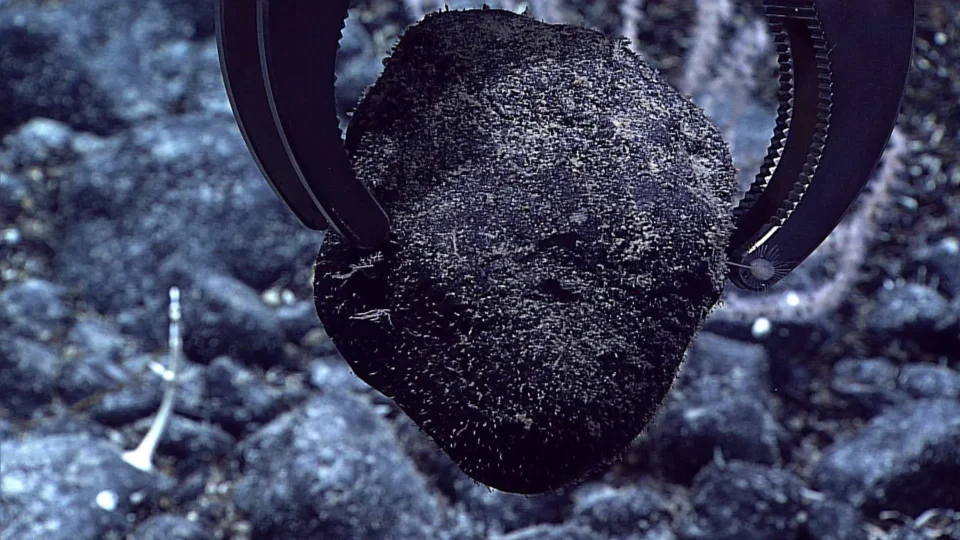
Polymetallic nodules, potato-sized rocks scattered across abyssal plains, contain manganese, nickel, copper, and cobalt. These nodules form over millions of years as metals precipitate from seawater and sediment pore waters around small nuclei like shark teeth or shell fragments. The Clarion-Clipperton Zone in the Pacific Ocean holds the most extensive known deposits, covering an area roughly the size of the continental United States.
Seafloor massive sulfides form at hydrothermal vents where hot, mineral-rich fluids meet cold seawater. These deposits contain high concentrations of copper, zinc, gold, and silver. They accumulate rapidly by geological standards but represent relatively small, localized resources compared to nodule fields.
2. Who Wants to Mine the Deep Sea
Several nations and corporations have secured exploration contracts through the International Seabed Authority, the UN body responsible for regulating deep sea mining in international waters. Companies from China, Japan, South Korea, Belgium, the United Kingdom, and other nations hold licenses covering millions of square kilometers of seafloor.
The push for deep sea mining accelerated as terrestrial supplies of critical metals face constraints. Growing demand for electric vehicle batteries, renewable energy infrastructure, and consumer electronics drives interest in alternative sources of cobalt, nickel, and rare earth elements. Proponents argue that deep sea mining could reduce dependence on problematic terrestrial mining operations that often involve environmental destruction and human rights concerns.
How Mining Threatens Deep Sea Ecosystems
Deep sea mining operations would physically destroy the habitats they target in ways that are essentially irreversible. The extreme conditions that make these ecosystems fascinating also make them fragile and slow to recover. Understanding these threats is crucial for evaluating whether mining should proceed.
1. Direct Habitat Destruction
Nodule mining involves scraping the seafloor to collect nodules, removing the top 5-10 centimeters of sediment and everything living there. This process would eliminate the slow-growing organisms attached to nodules, including sponges, corals, and sea anemones that may be hundreds or thousands of years old.
Seafloor massive sulfide mining would destroy hydrothermal vent communities. While active vents support dense biological communities, inactive vents also host specialized species adapted to the unique chemistry and structure of these deposits. Mining would remove the substrate these communities depend on, effectively eliminating their habitat.
2. Sediment Plumes and Water Column Impacts
Mining operations generate massive sediment plumes that pose severe threats to deep sea life. As mining vehicles crawl across the seafloor, they stir up fine sediments that can remain suspended in the water column for days or weeks. These plumes reduce light penetration, clog feeding structures of filter-feeding organisms, and bury sessile species unable to escape.
The discharge of wastewater from mining vessels adds additional stress. Processing seawater and sediment on surface ships before returning waste to the ocean creates turbidity and chemical changes that affect mid-water ecosystems. Many deep sea organisms, particularly larval stages and vertically migrating species, would encounter these disturbed water layers.
Current Regulatory Challenges
The International Seabed Authority faces the unprecedented challenge of developing environmental regulations for an industry that has never operated commercially. Established under the United Nations Convention on the Law of the Sea, the Authority must balance competing interests between mining companies, environmental groups, and member states.
1. The International Seabed Authority
Regulatory negotiations have proven contentious and slow. Environmental advocates argue that current draft regulations lack sufficient protections, while industry representatives push for streamlined permitting. The Authority’s legal framework requires it to ensure effective protection of the marine environment, but defining what constitutes effective protection remains debated.
A significant legal challenge emerged in 2021 when Nauru, sponsoring a mining company, triggered a provision requiring the Authority to finalize regulations within two years. This deadline created pressure to approve mining rules before scientific understanding of ecosystem impacts is complete. Many nations and organizations called for a precautionary pause on mining until better environmental baseline data is available.
2. National Jurisdictions and Enforcement
Within national exclusive economic zones, coastal states regulate seabed mining under their own laws. Some nations, including New Zealand and Namibia, have imposed moratoriums on deep sea mining pending further research. Others, like Papua New Guinea, have granted exploration licenses that could lead to extraction.
Enforcement of environmental regulations in the remote deep ocean presents practical challenges. Monitoring mining operations thousands of meters below the surface requires expensive technology and specialized expertise. The vast areas involved make comprehensive surveillance nearly impossible. Without robust enforcement mechanisms, regulations may prove ineffective at protecting deep sea ecosystems.
Scientific Research and Knowledge Gaps
Despite decades of deep sea research, fundamental knowledge gaps persist regarding deep sea biodiversity and ecosystem function. Scientists have sampled only a tiny fraction of the deep ocean floor. Many areas remain completely unexplored, and new species discoveries are routine in even well-studied regions.
1. What We Still Need to Learn
Baseline data on population sizes, species distributions, and ecosystem processes is insufficient to assess mining impacts meaningfully. Long-term monitoring of deep sea environments is technically challenging and expensive. Without this baseline information, detecting and attributing changes caused by mining becomes nearly impossible.
Understanding how deep sea ecosystems respond to disturbance requires experimental approaches that are difficult to implement at depth. Small-scale mining simulations provide some insights, but extrapolating these results to industrial-scale operations involves significant uncertainty. Ecosystem recovery processes, critical for determining mitigation requirements, remain poorly understood.
2. Emerging Research Technologies
Advances in technology are improving deep sea exploration capabilities. Autonomous underwater vehicles, remotely operated vehicles, and deep sea sensors enable more extensive and detailed surveys than previously possible. Environmental DNA sampling detects species presence from genetic material in water samples, revealing biodiversity without collecting specimens.
International research initiatives are expanding baseline knowledge. Programs like the Census of Marine Life and various national ocean exploration programs have documented thousands of new deep sea species. Collaborative research between industry, academia, and governments could improve environmental assessments, though conflicts of interest require careful management.
Alternative Solutions and Conservation Approaches
Critics of deep sea mining argue that reducing demand for virgin metals through improved recycling and circular economy approaches could eliminate the need for seafloor extraction. Current recycling rates for many critical metals remain low, representing significant opportunities for conservation.
1. Reducing Demand Through Circular Economy
Battery technology evolution may reduce demand for some targeted metals. Research into alternative chemistries that use more abundant elements could decrease pressure on cobalt and nickel supplies. Sodium-ion batteries and other emerging technologies offer potential substitutes for current lithium-ion systems.
Extended product lifespans and sharing economy models reduce overall material throughput. Keeping electronics and vehicles in use longer delays the need for replacement and associated mining. These demand-side approaches address root causes of resource pressure rather than seeking new extraction frontiers.
2. Terrestrial Mining Improvements
Improving environmental and social practices in existing terrestrial mining operations could provide alternatives to deep sea extraction. Stricter regulations, better enforcement, and certification schemes can reduce the harms associated with current mining. While not perfect, terrestrial operations are generally easier to monitor and regulate than deep sea activities.
Recycling mine waste and tailings from existing operations recovers additional materials without new extraction. Historical mining districts often contain significant metal inventories in waste piles that modern processing can recover. These approaches provide additional supply while remediating environmental liabilities.
The Economic and Social Dimensions
The economic benefits of deep sea mining would flow primarily to mining companies, sponsoring nations, and consumers of technology products. These benefits are concentrated and immediate, while costs are distributed across global populations and future generations. This temporal and spatial mismatch complicates decision-making about whether to proceed with extraction.
1. Who Benefits and Who Bears the Costs
Coastal communities dependent on fisheries may bear costs from mining impacts on marine ecosystems. While direct connections between deep sea mining and fisheries remain uncertain, ecosystem disruptions could affect species that support commercial and subsistence fishing. Indigenous peoples with cultural connections to the ocean face particular risks from environmental changes.
The principle of benefit-sharing under the Law of the Sea Convention requires that mining revenues support developing nations. Implementing this principle fairly requires robust institutional mechanisms that have yet to be established. Without effective benefit-sharing, deep sea mining could exacerbate global inequalities.
2. Intergenerational Ethics
Deep sea mining raises profound intergenerational ethical questions. The metals extracted would benefit current generations, while environmental damages persist for centuries or millennia. Future generations would inherit degraded ecosystems and lost biodiversity without having consented to these trade-offs.
The precautionary principle suggests avoiding actions with potentially severe, irreversible consequences when scientific understanding is incomplete. Applying this principle to deep sea mining would favor waiting until ecosystem impacts are better understood and mitigation measures proven effective.
Frequently Asked Questions (FAQ)
Deep sea biodiversity and mining threats raise complex questions that deserve careful consideration. Here are answers to some of the most common questions about this emerging issue.
1. What exactly is deep sea biodiversity?
Deep sea biodiversity refers to the variety of life forms found in ocean environments below approximately 200 meters depth, where sunlight no longer penetrates. This includes species living on the seafloor, in the water column above it, and within seafloor sediments. Deep sea biodiversity encompasses everything from microscopic bacteria to giant squid, from ancient coral gardens to strange creatures adapted to extreme pressure and darkness. Scientists believe the deep sea contains millions of species, most still unknown to science, representing unique evolutionary lineages found nowhere else on Earth.
2. Why do companies want to mine the deep sea?
Companies and nations are interested in deep sea mining primarily to access metals used in batteries, electronics, and renewable energy technologies. The deep seafloor contains concentrations of cobalt, nickel, copper, manganese, and rare earth elements that are becoming harder and more expensive to obtain from land-based mines. Growing demand for electric vehicles and renewable energy storage drives interest in these resources. Proponents argue that deep sea mining could reduce reliance on problematic terrestrial mining operations and provide materials essential for transitioning to clean energy.
3. How would deep sea mining actually work?
Different deposit types require different mining approaches. Polymetallic nodule mining involves remote-controlled vehicles crawling across the seafloor, collecting nodules and pumping them to surface vessels through riser pipes. Seafloor massive sulfide mining would use cutting equipment to break up mineral deposits, then pump material to the surface. Cobalt crust mining involves removing the outer layers of seamount rocks. All these methods generate sediment plumes, produce noise and light pollution, and require processing seawater and waste materials before returning them to the ocean.
4. What species are most at risk from deep sea mining?
Species most vulnerable to deep sea mining include those with limited geographic ranges, slow growth rates, and specific habitat requirements. Organisms living on manganese nodules, such as deep sea sponges and corals, face direct destruction from nodule collection. Species endemic to specific seamounts or hydrothermal vents could be eliminated if their only habitats are mined. Long-lived species that grow slowly or reproduce infrequently, such as some deep sea fish and invertebrates, would recover slowly from population losses. Many potentially at-risk species have not even been discovered or described by scientists yet.
5. Is deep sea mining currently happening?
As of early 2024, commercial deep sea mining has not yet begun, though extensive exploration has occurred. The International Seabed Authority has issued numerous exploration contracts allowing companies and nations to survey potential mining sites and test equipment. Several companies have conducted trials of mining equipment, generating controversy over whether these tests constitute actual mining. The legal and regulatory framework for commercial extraction remains under development, with significant debate about environmental protections and whether mining should proceed at all.
6. Can deep sea ecosystems recover from mining impacts?
Recovery of deep sea ecosystems from mining disturbance would likely take centuries to millennia, if it occurs at all. The extreme conditions of the deep sea, including limited food availability and cold temperatures, result in very slow growth rates for most organisms. Some species may be unable to recolonize disturbed areas if their specific habitat requirements are not restored. The slow formation rates of geological features like manganese nodules and cobalt crusts mean that mined areas would not recover within human timescales. Scientists generally agree that deep sea mining would cause effectively permanent damage to affected ecosystems.
7. What alternatives exist to deep sea mining?
Alternatives to deep sea mining include improving recycling rates for existing metals, designing products for easier material recovery, developing battery technologies that use more abundant elements, extending product lifespans, and improving environmental practices in terrestrial mining. Demand reduction through circular economy approaches could significantly decrease the need for newly mined materials. Some analysts argue that these alternatives, combined with responsible terrestrial mining, could meet material needs without the risks of deep sea extraction.
8. How can individuals help protect deep sea biodiversity?
Individuals can contribute to deep sea conservation by supporting organizations advocating for marine protection, choosing products designed for longevity and recyclability, participating in citizen science projects that advance ocean knowledge, and engaging with elected officials about marine policy decisions. Reducing personal consumption of electronics and supporting companies with strong sustainability practices decreases demand for newly mined materials. Staying informed about deep sea mining developments and sharing accurate information helps build public awareness of these largely invisible ecosystems and the threats they face.
Protecting Our Deep Ocean Heritage
Deep sea biodiversity and mining threats represent a defining environmental challenge that will shape ocean health for centuries to come. The choices made in the next few years regarding deep sea mining will determine whether these remarkable ecosystems survive for future generations to study and appreciate or become casualties of short-term economic interests. The precautionary principle demands that we fully understand what stands to be lost before allowing irreversible destruction of habitats that took millions of years to develop.
The deep ocean belongs to all humanity, including those not yet born. Its preservation requires international cooperation, robust scientific research, and political courage to prioritize long-term ecological values over immediate economic gains. While the challenges are significant, the opportunity to protect one of Earth’s last frontiers remains within reach. The question is whether we will act wisely before the machines descend into the darkness.