Coral Reef Restoration Using 3D Printing

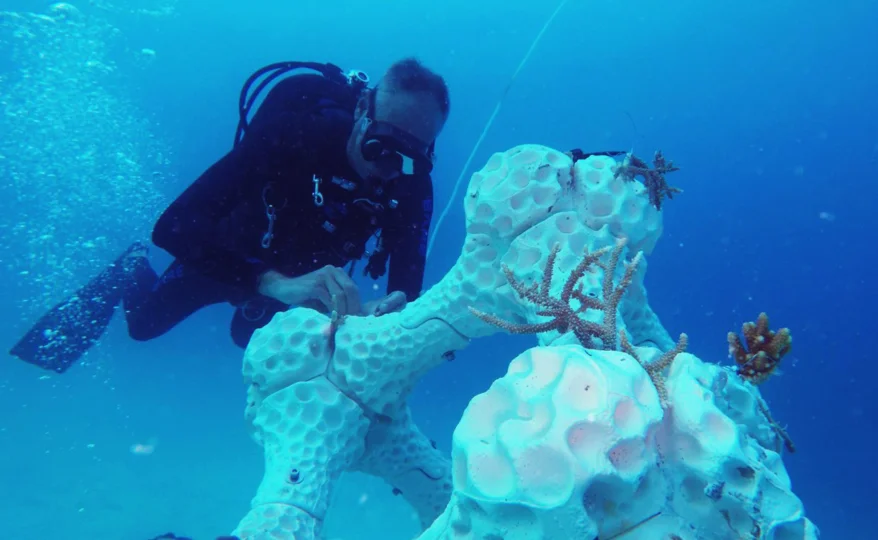
Coral reef restoration using 3D printing is revolutionizing marine conservation efforts worldwide. As climate change, ocean acidification, and human activities continue to devastate underwater ecosystems, scientists and engineers are turning to cutting-edge technology to rebuild what nature has lost. This innovative approach combines marine biology with advanced manufacturing to create artificial reef structures that not only replace damaged habitats but actively promote coral growth and biodiversity recovery.
The urgency behind these efforts cannot be overstated. Coral reefs support approximately 25% of all marine species despite covering less than 1% of the ocean floor. When reefs die, entire food webs collapse, coastal communities lose protection from storms, and millions of people who depend on reef fisheries face economic hardship. Traditional restoration methods like coral gardening and artificial reef deployment using concrete or sunken ships have shown limited success. Now, 3D printing offers unprecedented precision, customization, and ecological compatibility that could change everything.
Understanding the Crisis: Why Coral Reefs Need Help
Coral reef restoration using 3D printing emerges from an urgent need to address one of the most severe environmental crises facing our planet. Before exploring how this technology works, we must understand the scale of reef degradation and why conventional approaches have fallen short. The intersection of climate change, pollution, and overfishing has created unprecedented pressure on these delicate ecosystems, demanding solutions that match the complexity and speed of the threats they face. Scientists estimate that we have already lost half of the world’s coral reefs in recent decades, with the remainder facing existential risks that require immediate, innovative intervention.
1. The State of Global Coral Reefs
Coral reefs face unprecedented threats from multiple directions. Rising sea temperatures trigger mass bleaching events where corals expel their symbiotic algae and starve. Ocean acidification dissolves the calcium carbonate skeletons that form reef structures. Pollution from agricultural runoff and plastic waste smothers marine life. Overfishing disrupts the delicate balance of reef ecosystems.
According to recent scientific assessments, we have lost approximately 50% of the world’s coral reefs since the 1950s. Without intervention, scientists project that 90% of coral reefs could disappear by 2050. This collapse would represent one of the most significant biodiversity losses in human history, affecting everything from microscopic plankton to massive whale populations that depend on reef health for their survival.
2. Limitations of Traditional Restoration Methods
Conventional coral restoration techniques have saved countless reef sections but face inherent constraints. Coral gardening involves fragmenting healthy corals and transplanting them to damaged areas, which works well for small-scale projects but cannot address vast reef degradation. Artificial reefs built from concrete, metal, or decommissioned vessels provide hard substrates for marine life attachment, yet these materials often lack the complex surface textures and chemical compositions that natural corals prefer.
Traditional artificial structures also require significant time and labor to deploy. They cannot be easily customized to match specific local conditions or species requirements. Additionally, manufacturing and transporting heavy materials generates substantial carbon emissions, somewhat undermining the environmental goals of restoration projects.
How 3D Printing Technology Works for Reef Restoration
Coral reef restoration using 3D printing combines marine science with advanced manufacturing to create artificial structures that actively support coral growth and marine biodiversity recovery. This section explains the technical processes, specialized equipment, and innovative materials that make printed reef solutions possible.
1. The Basics of Additive Manufacturing for Marine Applications
3D printing, also known as additive manufacturing, builds objects layer by layer from digital designs. For coral reef applications, this technology uses specialized materials that mimic natural reef substrates while providing optimal conditions for coral settlement and growth. Unlike subtractive manufacturing that cuts away material, additive manufacturing creates precisely controlled structures with intricate geometries impossible to achieve through conventional construction methods.
Marine-grade 3D printers can produce reef modules ranging from small experimental tiles to massive structural units weighing several tons. The technology allows researchers to replicate natural reef complexity at micro and macro scales simultaneously, creating surfaces with the perfect roughness, porosity, and chemical properties that coral larvae seek when selecting settlement sites.
2. Materials Used in Printed Reef Structures
Scientists have developed several innovative materials specifically for underwater 3D printing applications. These include:
- Calcium carbonate-based composites that match the natural composition of coral skeletons
- Biorock or mineral accretion materials that use low-voltage electrical currents to precipitate limestone coatings
- Recycled ocean plastic formulations that address pollution while creating durable substrates
- Ceramic and clay mixtures fired at low temperatures to maintain chemical neutrality
- Bioactive cements enriched with natural additives that encourage marine organism colonization
Each material offers distinct advantages depending on local water chemistry, target species, and project duration. Researchers carefully select formulations based on comprehensive site assessments and long-term monitoring data from previous deployments.
Advantages of 3D Printed Coral Reefs
Advantages of 3D Printed Coral Reefs
Coral reef restoration using 3D printing offers distinct benefits that traditional restoration methods simply cannot match. From unprecedented design precision to faster deployment timelines and superior ecological integration, these advantages explain why marine conservationists increasingly turn to additive manufacturing for reef recovery projects.
1. Precision and Customization Capabilities
3D printing enables unprecedented control over reef architecture. Designers can create specific surface textures measured in microns, matching the exact preferences of target coral species. They can incorporate channels and cavities that provide shelter for fish, invertebrates, and other reef inhabitants. Complex geometries that mimic natural reef formations can be produced consistently and scaled appropriately for different marine environments.
This customization extends to addressing specific local threats. For areas with strong currents, engineers can design aerodynamic shapes that prevent structural damage. For regions with high sedimentation, they can create elevated platforms that keep corals above smothering debris. For sites with particular species assemblages, they can tailor habitat features to support those specific communities.
2. Accelerated Restoration Timelines
Traditional reef restoration projects often require years of preparation and construction. 3D printing dramatically compresses these timelines. Digital designs can be modified quickly based on field observations. Production can occur locally using portable printing systems, reducing transportation costs and carbon footprints. Multiple units can be manufactured simultaneously once designs are finalized.
Deployment itself becomes more efficient with modular printed components. Rather than casting massive monolithic structures that require heavy lifting equipment, teams can assemble printed modules on-site or lower pre-fabricated units using smaller vessels. This flexibility allows restoration to occur in remote locations previously considered inaccessible for large-scale projects.
3. Enhanced Ecological Integration
Perhaps the most significant advantage involves ecological performance. Studies comparing printed reef substrates to traditional materials consistently show higher coral settlement rates, faster growth, and greater biodiversity on printed structures. The surface complexity achievable through 3D printing provides more attachment points for coral polyps, more hiding places for juvenile fish, and more varied microhabitats that support diverse species assemblages.
Some advanced designs incorporate living elements directly into the printing process. Researchers have experimented with embedding coral fragments, beneficial bacteria, and growth-promoting compounds within printed materials. These bio-integrated approaches essentially create “living architecture” that accelerates ecosystem recovery beyond what passive substrates can achieve.
Leading Projects and Real-World Applications
Coral reef restoration using 3D printing has moved beyond laboratory experiments into active deployment across multiple continents. From the Maldives to the Caribbean and Mediterranean, these pioneering projects demonstrate how printed reef technology performs under real ocean conditions while providing valuable lessons for future expansion.
1. The Maldives Coral Reef Restoration Initiative
The Maldives represents ground zero for climate-driven reef degradation, with 99% of the island nation depending on healthy reefs for coastal protection and tourism revenue. Several 3D printing projects have launched there with remarkable results. One notable initiative used ceramic and terracotta printing to create reef modules specifically designed for local coral species. Within months of deployment, printed structures showed coral coverage comparable to decades-old natural reef sections.
These Maldivian projects emphasize community involvement, training local divers and fishermen to monitor printed reefs and participate in ongoing maintenance. This approach ensures that technological solutions align with traditional ecological knowledge and local economic needs. The success has inspired neighboring island nations to explore similar programs.
2. Caribbean and Pacific Island Deployments
Across the Caribbean, where coral disease and warming have devastated iconic reef systems, 3D printing offers hope for recovery. Projects in Bonaire, Curaçao, and the Florida Keys have deployed printed reef balls and modular systems with encouraging early results. Researchers document not just coral growth but the return of critical herbivorous fish that control algae overgrowth.
Pacific island communities in Palau, Fiji, and Australia have implemented printed reef solutions tailored to their specific challenges. Australian projects focus on the Great Barrier Reef, using printed structures to stabilize rubble fields created by cyclone damage and provide settlement surfaces for heat-tolerant coral genotypes identified through selective breeding programs.
3. European Mediterranean Efforts
Even temperate reef systems benefit from 3D printing innovation. Mediterranean projects address the decline of gorgonian sea fans and cold-water coral communities threatened by warming and trawling damage. Printed structures here often incorporate designs that deter illegal fishing gear while supporting slow-growing, long-lived species that characterize these deeper, darker reef ecosystems.
Technical Challenges and Solutions
Coral reef restoration using 3D printing faces significant hurdles that must be resolved to achieve global conservation impact. From scaling production to meet massive demand, ensuring long-term material durability in harsh marine environments, and developing sustainable economic models, this section examines the obstacles confronting the field and the innovative approaches researchers are developing to overcome them.
1. Scaling Production for Global Impact
Despite impressive demonstrations, 3D printing for reef restoration faces scalability constraints. Current production rates cannot match the global scale of reef degradation. A single major bleaching event might devastate thousands of square kilometers, while even the most efficient printing operations produce structures measured in meters.
Solutions emerging include swarm robotics approaches where multiple printers work simultaneously, mobile printing barges that manufacture units directly at deployment sites, and hybrid approaches combining printed components with conventional construction for large-scale frameworks. Researchers also develop standardized modular systems that can be mass-produced while maintaining customization capabilities through interchangeable surface tiles and attachment features.
2. Material Durability and Longevity
Long-term performance of printed materials in marine environments requires careful validation. Saltwater corrosion, biofouling, wave action, and ultraviolet degradation all threaten structural integrity. Early deployments inform material improvements, with second and third-generation formulations showing significantly enhanced durability compared to initial prototypes.
Advanced materials research focuses on self-healing composites that can repair minor damage autonomously, biodegradable frameworks that gradually dissolve as natural reef structures consolidate, and smart materials that respond to environmental conditions by adjusting their surface properties or releasing beneficial compounds.
3. Cost-Effectiveness and Economic Models
3D printed reef restoration must compete economically with alternative conservation approaches and with simply allowing natural recovery where possible. Initial projects relied heavily on research grants and philanthropic funding. As the field matures, cost reduction through technological improvement and economies of scale becomes essential.
Economic analyses increasingly demonstrate that printed reef restoration provides superior return on investment compared to traditional methods when considering long-term ecological benefits and avoided costs from coastal protection loss. Innovative financing mechanisms including blue bonds, reef insurance products, and tourism revenue sharing are emerging to support sustained implementation.
The Future of Marine Conservation Technology
Additive manufacturing for marine ecosystems represents just the beginning of how technology can transform ocean conservation efforts. As 3D printing capabilities expand and integrate with emerging fields like bioprinting, artificial intelligence, and autonomous robotics, the potential for technological reef restoration continues growing in scope and sophistication.
1. Integration with Broader Restoration Strategies
3D printing does not represent a standalone solution but rather one powerful tool within comprehensive reef restoration strategies. Future approaches combine printed substrates with coral propagation, genetic selection for heat tolerance, algae and predator management, and watershed-based pollution reduction. The technology enables more efficient deployment of these integrated interventions by providing optimal physical foundations for biological restoration.
Digital modeling and simulation capabilities allow researchers to test reef designs virtually before physical production, predicting how structures will interact with local hydrodynamics, sediment transport, and species behavior. This virtual prototyping reduces costly field trial errors and accelerates design optimization.
2. Emerging Technologies and Innovations
Several frontier developments promise to enhance 3D printing applications for marine conservation. Bioprinting techniques may eventually allow direct printing of living coral tissue and symbiotic algae combinations, essentially creating “seed corals” ready for immediate deployment. Autonomous underwater vehicles equipped with printing capabilities could construct reef features in deep or dangerous locations inaccessible to human divers.
Artificial intelligence and machine learning optimize design processes by analyzing vast datasets from natural reef structures and restoration outcomes to identify ideal architectural features. Blockchain-based monitoring systems track printed reef performance over decades, creating transparent records of conservation impact that attract sustained funding and regulatory support.
Frequently Asked Questions (FAQ)
Marine habitat reconstruction through advanced manufacturing generates many questions from researchers, conservationists, and concerned citizens alike. This section addresses the most common inquiries about how printed reef technology works, its effectiveness, safety considerations, and practical implementation challenges.
1. What exactly is coral reef restoration using 3D printing?
Coral reef restoration using 3D printing involves creating artificial reef structures through additive manufacturing technology to replace or supplement damaged natural coral habitats. Unlike traditional concrete or metal artificial reefs, printed structures can be precisely designed to match natural reef complexity, chemistry, and surface characteristics that corals and other marine life prefer. The process starts with digital modeling of reef features, followed by layer-by-layer construction using specialized marine-grade materials, and concludes with deployment to ocean sites where natural colonization occurs.
2. How long does it take for 3D printed reefs to become fully functional ecosystems?
Initial colonization by bacteria, algae, and microscopic organisms occurs within days or weeks of deployment. Coral settlement typically begins within three to six months, depending on local coral spawning schedules and water conditions. However, achieving fully functional ecosystem status comparable to mature natural reefs requires three to five years for basic structural complexity and biodiversity, with continued development over decades. The timeline varies significantly based on local species composition, water quality, and whether active coral transplantation accompanies passive natural colonization.
3. Are 3D printed reef materials safe for marine life and the environment?
Rigorous testing precedes deployment of any printed reef materials to ensure environmental safety. Researchers evaluate chemical leaching, physical stability, and biological compatibility through laboratory trials and controlled field tests. Approved materials for marine applications must meet strict standards for non-toxicity, pH neutrality, and structural integrity under ocean conditions. Many projects specifically use materials derived from natural compounds like calcium carbonate that integrate seamlessly with reef chemistry. Continuous monitoring of deployed structures confirms that approved materials support rather than harm surrounding ecosystems.
4. Can 3D printing restore reefs faster than climate change destroys them?
Currently, global reef restoration capacity, including 3D printing approaches, cannot match the scale and speed of climate-driven reef degradation. However, 3D printing significantly accelerates restoration compared to traditional methods and enables intervention in previously inaccessible areas. The technology proves most valuable for protecting critical reef sections, preserving biodiversity reservoirs, and maintaining ecosystem services while broader climate mitigation efforts reduce global stressors. Success requires combining technological restoration with aggressive carbon emission reductions, pollution control, and sustainable fishing practices that address root causes of reef decline.
5. What role do local communities play in 3D printed reef projects?
Community involvement determines long-term success of printed reef initiatives. Local fishermen, divers, and coastal residents possess invaluable knowledge of reef conditions, species behavior, and seasonal patterns that inform design and deployment decisions. Training community members to monitor printed reefs, report observations, and perform maintenance creates sustainable stewardship capacity. Economic benefits from restored reefs, including fisheries recovery and tourism opportunities, must flow equitably to local populations to ensure continued protection of restored areas. Many successful projects establish community-based management committees with genuine authority over reef restoration activities.
6. How much does coral reef restoration using 3D printing cost compared to traditional methods?
Current 3D printed reef projects often have higher initial costs than simple concrete artificial reefs due to technology development, specialized equipment, and material research expenses. However, when evaluating total project costs including deployment logistics, monitoring requirements, and ecological outcomes per dollar invested, printed reefs increasingly demonstrate competitive or superior cost-effectiveness. As the technology matures and production scales up, costs continue declining. Additionally, printed reefs often achieve desired ecological results faster than traditional methods, reducing the extended monitoring and maintenance periods that drive up long-term project expenses.
Building Hope Beneath the Waves
Coral reef restoration using 3D printing represents humanity’s growing capability to engineer solutions for environmental challenges we have created. While no technology can fully replace the intricate ecosystems developed over millennia, additive manufacturing offers unprecedented tools to assist natural recovery processes and preserve marine biodiversity for future generations. The combination of digital precision, ecological science, and community engagement emerging from these projects provides a template for conservation in the Anthropocene era.
Success requires sustained commitment, continued innovation, and honest acknowledgment that technology complements but cannot substitute for addressing climate change and pollution at their sources. As we refine these techniques and expand their application, we move closer to a future where healthy coral reefs continue supporting ocean life and human communities despite the challenges ahead. The printed reefs taking shape in waters worldwide today may well become the foundation for thriving marine ecosystems our grandchildren will explore and cherish.