AI Water Management 2026

AI water management 2026 has emerged as one of the most critical technological frontiers in the fight against global water scarcity. As climate change intensifies and populations grow, the intersection of artificial intelligence and water infrastructure is no longer a futuristic concept. It is happening right now, transforming how we monitor, distribute, and conserve the water that sustains all life on Earth. From predictive leak detection to intelligent treatment plants, AI is giving water utilities and industries the tools they need to do more with less while protecting this vital resource for future generations.
What Is AI Water Management and Why Does It Matter Now
AI water management refers to the application of machine learning algorithms, predictive analytics, and automated systems to optimize every aspect of water infrastructure. This includes everything from detecting leaks in underground pipes before they burst to forecasting water demand based on weather patterns and population data. The technology has reached a tipping point in 2026, moving from experimental pilots to mission-critical infrastructure that utilities cannot afford to ignore.
The urgency driving this transformation is impossible to overstate. Water scarcity already affects billions of people worldwide, and aging infrastructure in developed nations loses trillions of gallons annually through leaks and inefficiencies. Traditional water management relies on reactive approaches: fixing problems after they occur and sampling quality through manual testing. AI flips this model entirely, enabling predictive and preventive strategies that catch issues before they become crises. According to industry experts, artificial intelligence water conservation technologies are now essential for utilities looking to modernize their operations and meet increasingly strict environmental regulations.
The economic case is equally compelling. The AI-driven water management market is projected to reach approximately USD 20.74 billion by 2026, with expectations to grow to USD 37.43 billion by 2031. This represents a compound annual growth rate of 12.54%, reflecting strong demand across municipal, industrial, and agricultural sectors. Utilities that fail to adopt these technologies risk falling behind competitors who can deliver more reliable service at lower operational costs.
The Core Technologies Powering Smart Water Systems
The transformation of water infrastructure through artificial intelligence relies on a sophisticated stack of interconnected technologies working in harmony. Smart water systems combine advanced sensors, powerful computing platforms, and intelligent algorithms to create networks that can monitor, analyze, and respond to conditions in real-time. Understanding these core technologies is essential for anyone looking to implement or invest in modern water management solutions, as each component plays a critical role in delivering the efficiency and reliability gains that AI promises.
1. Machine Learning and Predictive Analytics
At the heart of AI water management 2026 lies machine learning: the ability of computer systems to learn from data and improve their performance without explicit programming. In water infrastructure, machine learning models analyze vast datasets from sensors, weather stations, and historical usage patterns to predict everything from pipe failures to contamination events.
These predictive capabilities are transforming maintenance strategies. Instead of replacing pipes on fixed schedules or waiting for emergencies, utilities can now target their limited resources where algorithms indicate highest risk. Machine learning water quality applications use pattern recognition to detect anomalies in sensor data that might indicate bacterial growth, chemical contamination, or equipment malfunction. This shift from reactive to predictive maintenance reduces costs, prevents service disruptions, and protects public health.
2. Internet of Things and Real-Time Monitoring
Smart water systems depend on dense networks of Internet of Things sensors that continuously monitor flow rates, pressure, temperature, pH levels, turbidity, and chemical composition. These sensors have become dramatically more affordable and reliable, enabling utilities to deploy them at scale across treatment plants and distribution networks.
The data generated by these sensors feeds directly into AI platforms that can respond in real-time. When sensors detect unusual pressure drops that suggest a leak, automated valves can isolate the affected section within seconds. When water quality parameters drift outside safe ranges, treatment processes adjust automatically. This level of responsiveness was impossible with traditional manual monitoring and control systems.
3. Digital Twins and Virtual Simulation
One of the most powerful applications of AI in water management is the digital twin: a virtual replica of physical water infrastructure that operates in real-time. These sophisticated models allow engineers to simulate scenarios, test control strategies, and optimize operations without risking the actual system.
Digital twins are particularly valuable for complex treatment plants where multiple processes interact. Operators can run “what-if” scenarios to see how the system would respond to equipment failures, contamination events, or demand spikes. This capability supports better decision-making, reduces energy consumption, and improves regulatory compliance. In 2026, digital twin technology is expanding beyond individual facilities to encompass entire regional water systems, enabling coordinated management of treatment, distribution, and stormwater across cities.
Key Applications Transforming the Water Sector
The theoretical promise of AI water management becomes tangible through specific applications that solve real problems facing utilities, industries, and communities today. These implementations range from preventing catastrophic pipe failures to optimizing every drop of water used in agriculture, demonstrating how artificial intelligence moves from concept to concrete impact. By examining these key applications in detail, we can understand not only what AI can do for water systems, but also how it delivers measurable returns on investment while addressing critical environmental and public health challenges.
1. Intelligent Leak Detection and Prevention
Non-revenue water (water that is treated and distributed but never reaches paying customers due to leaks) represents one of the biggest challenges facing utilities. In some systems, leakage rates exceed 30% of total production. AI-powered leak detection is changing this equation dramatically.
Machine learning algorithms analyze pressure and flow data to identify signatures that indicate leaks, often locating problems before they surface or cause major damage. Some systems use acoustic sensors combined with AI to “listen” for the sound of escaping water in pipes. The impact is substantial: AI and IoT integration has enhanced leak detection capabilities by approximately 40% in early-adopting utilities.
Beyond detection, AI enables predictive prevention. By analyzing pipe age, material, soil conditions, and operational stress, algorithms can forecast which sections are most likely to fail. This allows utilities to prioritize replacement and rehabilitation investments where they will have maximum impact.
2. Optimized Water Treatment Operations
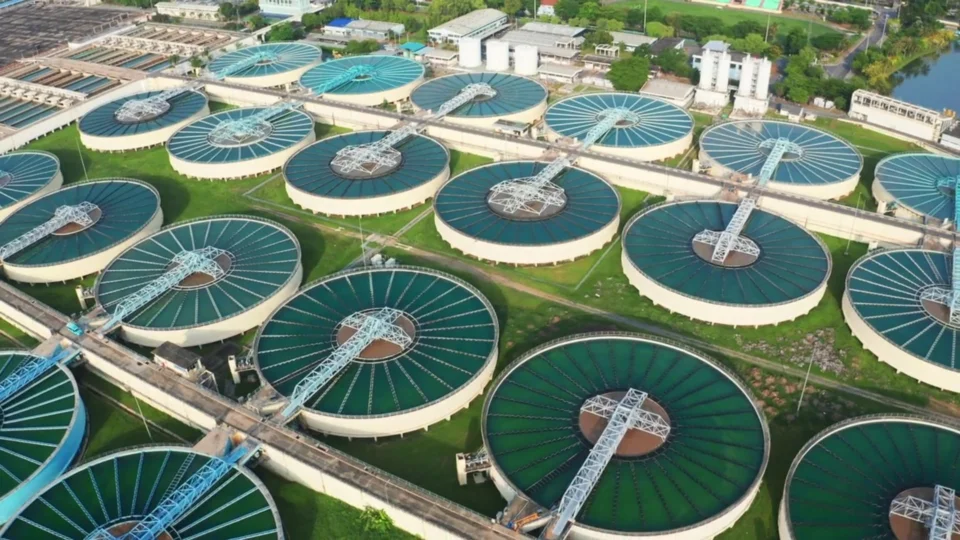
Treatment plants are complex facilities where chemical dosing, aeration, filtration, and disinfection must be carefully balanced to meet quality standards while minimizing costs. AI water optimization systems use real-time data to adjust these processes continuously.
For example, machine learning models can predict incoming water quality based on upstream conditions and weather forecasts, allowing operators to adjust treatment before problems arrive. AI-powered soft sensors (algorithms that predict water quality parameters using readily available operational data) can forecast total organic carbon levels and other critical metrics faster and more cost-effectively than laboratory testing.
These optimizations deliver measurable benefits. Studies show that AI-controlled systems can reduce energy consumption significantly through smarter aeration and pumping schedules. Chemical usage drops when dosing is precisely matched to actual needs rather than set conservatively based on worst-case assumptions. The result is cleaner water, lower costs, and reduced environmental impact.
3. Smart Irrigation and Agricultural Water Management
Agriculture consumes approximately 70% of global freshwater withdrawals, making it a critical target for conservation efforts. AI-powered irrigation systems are helping farmers use water more efficiently while maintaining or improving crop yields.
These systems integrate multiple data sources (soil moisture sensors, weather forecasts, satellite imagery, and crop growth models) to determine exactly when and how much to irrigate. Rather than running sprinklers on fixed schedules, precision irrigation delivers water only where and when plants need it. This approach can reduce agricultural water use by 20-30% while actually improving yields by preventing both under and over-watering.
Machine learning models also help farmers predict crop water requirements throughout the growing season, enabling better planning and resource allocation. As water scarcity increases competition for limited supplies, these AI tools become essential for agricultural sustainability and food security.
4. Flood and Drought Prediction
Climate change is making extreme weather events more frequent and severe, threatening communities with both too much and too little water. AI is improving our ability to predict and prepare for these events.
Machine learning algorithms analyze vast datasets of climate patterns, rainfall records, river levels, and soil conditions to forecast floods days or even weeks in advance. These predictions enable authorities to issue early warnings, evacuate vulnerable areas, and deploy protective measures before disaster strikes. Google’s AI flood forecasting system, for instance, has significantly improved disaster preparedness in flood-prone regions by providing accurate, actionable predictions.
For drought prediction, AI models assess snowpack levels, reservoir storage, groundwater conditions, and long-range weather forecasts to project water availability months ahead. This foresight allows water managers to implement conservation measures, adjust allocations, and avoid crisis conditions.
The Double-Edged Sword: AI’s Own Water Footprint
While AI offers powerful solutions for water management, the technology itself has a significant water footprint that cannot be ignored. Data centers powering AI systems require massive amounts of water for cooling, and this demand is growing rapidly as AI adoption accelerates.
Training large AI models consumes enormous quantities of water. One study estimated that training GPT-3 alone consumed approximately 700,000 megaliters of clean water: enough to manufacture hundreds of cars or produce thousands of smartphones. In regions where major tech companies operate data centers, local water use has jumped by millions of gallons during periods of intensive AI training.
The geographic distribution of data centers compounds this challenge. Many facilities are located in regions already facing water scarcity, amplifying strain on local communities and ecosystems. Projections suggest that water demand for AI data centers could increase by 20-25% annually through 2030, with Asia emerging as a major consumer due to rapid technology growth.
Addressing this paradox requires conscious choices about where and how AI infrastructure is built. Locating data centers in areas with sustainable water supplies, investing in closed-loop cooling technologies that minimize consumption, and improving transparency in water use reporting are essential steps. The water conservation benefits of AI applications must ultimately outweigh the technology’s own resource demands.
Implementation Challenges and Solutions
Deploying AI water management systems at scale involves far more than installing sensors and software. Utilities and organizations must navigate complex technical, organizational, and financial hurdles that can make or break these ambitious digital transformation projects. Understanding these challenges and the proven strategies for overcoming them is essential for leaders who want to move beyond pilot programs and achieve lasting operational improvements across their entire water infrastructure.
1. Data Quality and Integration
AI systems are only as good as the data they receive. Inconsistent sensor calibration, missing historical records, and siloed information systems remain significant barriers to effective implementation. Utilities often discover that their existing data is too fragmented or unreliable to support sophisticated machine learning models.
Solving these challenges requires investment in data infrastructure and governance. Standardized protocols for data collection, processing, and analysis ensure consistency and comparability. Cloud-based platforms can integrate information from multiple sources, breaking down silos between different departments and systems. Training programs help staff understand the importance of data quality and their role in maintaining it.
2. Cybersecurity and System Protection
As water infrastructure becomes more connected and automated, cybersecurity risks increase. A compromised AI system could potentially disrupt treatment processes, contaminate supplies, or damage equipment. Recent years have seen growing awareness of these threats, with security concerns moving to the forefront following breaches in critical infrastructure sectors.
Protecting smart water systems requires robust cyber hygiene practices, network segmentation to isolate critical control systems, and clear governance frameworks for data ownership and access. Vendors and utilities must collaborate to build security features into systems from the ground up rather than adding them as afterthoughts. Regular security audits and incident response planning help organizations prepare for potential attacks.
3. Skills and Workforce Development
The shift to AI water management 2026 requires new skills that many existing water professionals do not possess. Operators must learn to work with AI recommendations, interpret data analytics, and manage exceptions rather than performing routine manual adjustments. Engineers need to understand both water treatment principles and machine learning capabilities to design effective systems.
Closing this skills gap requires partnerships between utilities, technology vendors, and educational institutions. Training programs must evolve to include data science, AI fundamentals, and cybersecurity alongside traditional water engineering. The most successful implementations involve operators in the design and testing of AI systems, building trust and ensuring that technology augments rather than replaces human expertise.
Regional Trends and Market Developments
The adoption of AI water management technologies varies significantly across different regions of the world, shaped by local infrastructure conditions, regulatory environments, economic resources, and water stress levels. Understanding these regional differences is crucial for technology vendors, investors, and water sector professionals who need to tailor solutions to specific market contexts. From aging infrastructure in developed economies to rapid urbanization in emerging markets, each region presents unique opportunities and challenges that influence how AI is deployed and scaled in the water sector.
1. North America and Europe
In developed markets, AI adoption is driven by the need to modernize aging infrastructure and meet increasingly strict environmental regulations. Utilities are focusing on pressure management, leak detection, and energy optimization. Government funding programs, including the Infrastructure Investment and Jobs Act in the United States, are providing resources that enable even smaller utilities to invest in modernization.
The emphasis in these regions is on integrating AI with existing infrastructure rather than building new systems from scratch. This presents unique challenges, as legacy equipment may not have been designed for digital connectivity. Retrofit solutions and hybrid approaches that combine old and new technologies are common strategies.
2. Asia-Pacific
The Asia-Pacific region is seeing rapid advancement in AI water management, driven by massive urbanization and water stress. India’s Jal Jeevan Mission and similar initiatives are deploying smart technologies to extend water access to rural communities. China’s investments in smart cities include sophisticated water management components.
In these markets, AI is often deployed in greenfield developments where new infrastructure can be designed with digital capabilities from the start. This allows for more integrated and comprehensive implementations than are possible in regions constrained by legacy systems.
3. Emerging Markets
Developing regions face the dual challenge of extending water access to unserved populations while improving management of existing systems. AI offers opportunities to leapfrog traditional infrastructure approaches, using mobile connectivity and cloud computing to deliver sophisticated monitoring and management capabilities at lower cost.
However, implementation in these contexts requires attention to local conditions and constraints. Solutions must be robust enough to operate in challenging environments, affordable for resource-limited utilities, and supported by training programs that build local capacity.
The Future of AI in Water Management
Looking beyond 2026, several trends will shape the continued evolution of AI water management. The integration of AI with other emerging technologies (blockchain for water trading, advanced materials for sensing, renewable energy for off-grid systems) will create new possibilities for sustainable water use.
Explainable AI will become increasingly important as regulators and the public demand transparency in automated decision-making. Systems that can clearly explain why they made specific recommendations will build trust and enable better human oversight. This is particularly critical for decisions affecting public health and safety.
The scope of AI applications will expand from individual utilities to watershed-scale management. Coordinated systems that optimize water use across agriculture, industry, and municipalities while maintaining ecosystem health represent the ultimate promise of intelligent water management. Achieving this vision will require unprecedented collaboration between sectors and jurisdictions.
Climate adaptation will drive innovation as communities confront changing precipitation patterns, more extreme weather events, and shifting water availability. AI systems that can learn and adapt to new conditions will be essential for resilience in an uncertain future.
Frequently Asked Questions (FAQ)
As AI water management 2026 gains momentum across the water sector, professionals and decision-makers naturally have questions about how these technologies work, what benefits they deliver, and what risks they present. This section addresses the most common inquiries that arise when utilities, industries, and communities consider investing in artificial intelligence solutions for their water challenges. By providing clear, detailed answers, we aim to demystify the technology and help readers make informed decisions about whether and how to integrate AI into their water operations.
1. How does AI actually detect leaks in water pipes?
AI leak detection combines sensor data with machine learning algorithms to identify patterns that indicate leaks. Pressure sensors monitor for sudden drops that suggest water escaping from pipes. Flow sensors detect discrepancies between water entering and leaving a section of pipe. Acoustic sensors listen for the distinctive sound of water leaking under pressure. Machine learning models analyze these signals to distinguish real leaks from normal operational variations, reducing false alarms and enabling rapid response. Some systems can even predict where leaks are likely to occur based on pipe characteristics and environmental conditions.
2. What makes AI water quality monitoring better than traditional testing?
Traditional water quality monitoring relies on periodic sampling and laboratory analysis, which creates gaps between measurements and delays in detecting problems. AI-powered monitoring uses continuous sensor data analyzed in real-time, providing immediate alerts when parameters drift outside safe ranges. Machine learning models can predict water quality trends before they become violations, allowing preventive action. Additionally, AI soft sensors can estimate difficult-to-measure parameters using data from simpler, cheaper sensors, reducing monitoring costs while improving coverage. This proactive approach protects public health more effectively than reactive testing regimes.
3. Can small water utilities afford AI technology?
Yes, AI water management solutions are becoming increasingly accessible to smaller utilities. Cloud-based platforms eliminate the need for expensive on-site computing infrastructure, while subscription pricing models spread costs over time. Federal and state funding programs, including infrastructure grants and rural development loans, specifically support technology modernization for small systems. Some vendors offer scaled-down solutions designed specifically for smaller operations. The key is starting with high-impact applications like leak detection or energy optimization where AI delivers clear return on investment that justifies the initial expenditure.
4. How does AI help with water conservation in agriculture?
AI enables precision agriculture that applies water only when and where crops need it. Soil moisture sensors, weather data, and crop growth models inform irrigation decisions that optimize water use. Machine learning algorithms learn the specific water requirements of different crops under varying conditions, adjusting schedules automatically. Satellite and drone imagery identifies areas of fields that are stressed or over-watered, enabling targeted interventions. These technologies can reduce agricultural water use by 20-30% while maintaining or improving yields, addressing the sector that consumes the majority of global freshwater withdrawals.
5. What are the main risks of relying on AI for critical water infrastructure?
The primary risks include cybersecurity vulnerabilities, over-dependence on automated systems, and data quality issues. Connected infrastructure can be targeted by hackers seeking to disrupt services or cause damage. Over-reliance on AI recommendations without human oversight can lead to missed judgment calls that require contextual understanding. Poor data quality produces unreliable AI outputs that could drive wrong decisions. Mitigating these risks requires robust security protocols, maintaining human expertise and oversight, investing in data governance, and building systems with appropriate safeguards and fail-safes.
6. How is AI addressing the water-energy nexus?
AI optimizes the water-energy nexus by reducing the energy required to treat and move water while minimizing water needed for energy production. Smart pumping systems use machine learning to optimize schedules based on electricity prices and demand patterns, reducing both costs and energy consumption. AI-controlled cooling towers minimize water use while maintaining efficiency in power plants. Predictive maintenance prevents equipment failures that waste both resources. By treating water and energy as integrated systems rather than separate challenges, AI helps utilities achieve sustainability goals across both dimensions.
Building a Sustainable Water Future With Intelligent Technology
AI water management 2026 represents far more than a technological upgrade. It is a fundamental shift in how humanity stewards its most essential resource. The challenges ahead are daunting: climate change, population growth, aging infrastructure, and increasing competition for limited supplies. But the tools to meet these challenges have never been more powerful or more accessible.
The utilities, industries, and communities that thrive in coming decades will be those that embrace artificial intelligence not as a replacement for human expertise but as an amplifier of human capability. By combining the pattern-recognition power of machine learning with the contextual judgment of experienced professionals, we can build water systems that are more efficient, more resilient, and more equitable.
The journey requires investment, learning, and adaptation. Data infrastructure must be built, workforces must be trained, and governance frameworks must evolve. But the alternative (continuing with reactive, inefficient approaches in an era of scarcity) is not viable. The technology is ready. The economics are compelling. The need is urgent. AI water management 2026 is not just an opportunity. It is an imperative for anyone who depends on clean, reliable water. And that means everyone.