AI Energy Management System for Home Solar: Smart Power Control

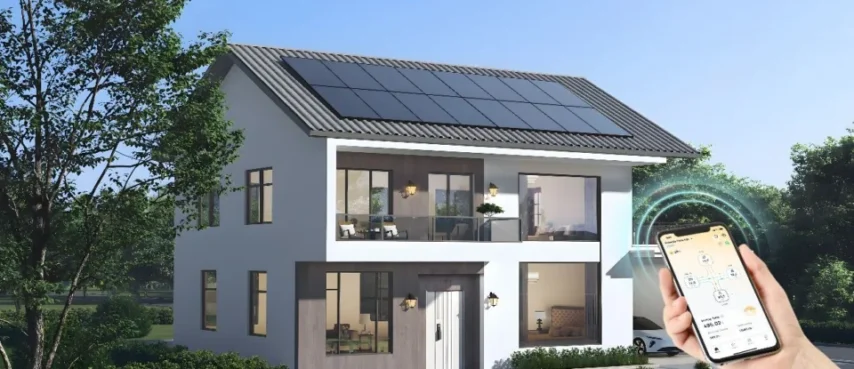
An AI energy management system for home solar is transforming how homeowners harness, store, and consume renewable energy. These intelligent platforms use machine learning algorithms to optimize every watt of electricity your panels generate, ensuring nothing goes to waste while slashing your utility bills. If you’ve invested in rooftop solar or are planning to, adding artificial intelligence to the mix is the smartest upgrade you can make.
Traditional solar setups without smart management often leave money on the table. Excess power gets sent back to the grid for pennies, while you buy expensive electricity during evening hours. AI changes this equation entirely by predicting your energy needs, monitoring weather patterns, and automatically deciding whether to store power, use it immediately, or sell it back when rates peak.
What Makes AI Solar Management Different
Smart home energy systems with artificial intelligence do more than basic monitoring. They learn your household’s unique patterns over time. The system notices when you run the dishwasher, how long your air conditioner cycles, and even anticipates spikes from electric vehicle charging. This deep learning creates a personalized energy strategy that static timers and simple automation simply cannot match.
The real magic happens in the decision-making layer. Your AI controller communicates with inverters, battery storage units, smart appliances, and the utility grid simultaneously. It processes thousands of data points per minute to make split-second choices about power flow. Should the system charge your batteries now or wait for cheaper grid rates tonight? Is a cloud bank approaching that will temporarily reduce solar output? These calculations happen constantly without you lifting a finger.
Core Features of Intelligent Solar Controllers
Modern AI energy management systems for home solar pack sophisticated capabilities that go far beyond simple on-off switching. These intelligent platforms act as the brain of your renewable energy setup, coordinating generation, storage, and consumption through advanced algorithms that continuously adapt to changing conditions. Understanding what these systems actually do helps homeowners appreciate why artificial intelligence has become essential for maximizing solar investments.
1. Predictive Energy Analytics
Machine learning solar optimization relies heavily on forecasting. Advanced systems pull weather data from multiple sources to predict solar generation hours or even days ahead. They combine this with your historical consumption patterns to build accurate energy models. If Friday evenings always spike because of laundry and hot showers, the AI prepares by ensuring full battery reserves beforehand.
2. Real-Time Load Balancing
Smart solar battery management means your home becomes a miniature power plant. The AI distributes electricity exactly where needed, prioritizing essential circuits during outages and shifting non-critical loads to off-peak hours. Some systems even communicate with smart water heaters, pool pumps, and EV chargers to schedule their operation during surplus solar periods.
3. Grid Interaction Intelligence
Net metering optimization represents a major advantage. AI systems know your utility’s rate structures better than you do. They automatically export power when buyback rates hit daily highs and import cheap grid electricity during low-demand windows. This arbitrage capability turns your home into an active participant in energy markets rather than a passive consumer.
4. Equipment Health Monitoring
Predictive maintenance keeps your investment running smoothly. Artificial intelligence tracks inverter performance, panel degradation, and battery health metrics. It alerts you to shading issues, equipment faults, or efficiency drops before they become expensive problems. Some platforms even schedule automated cleaning reminders based on local dust and pollen conditions.
Popular AI Solar Platforms Available Today
The market for intelligent home energy solutions has exploded recently. Several standout options cater to different needs and budgets:
- Tesla Powerwall with Autobidder integrates seamlessly with solar installations, offering sophisticated machine learning that participates in virtual power plants. The system aggregates thousands of home batteries to provide grid services, earning owners additional revenue.
- SolarEdge Home Hub combines panel-level optimization with AI-driven consumption analysis. Their platform tracks every module individually, identifying underperformers while managing whole-home energy flows through an intuitive app interface.
- Enphase IQ Battery Systems feature Enlighten software that uses predictive algorithms to maximize self-consumption. The microinverter architecture pairs beautifully with smart energy management, offering granular control most string inverter setups cannot match.
- FranklinWH and LG Chem provide open-platform batteries compatible with third-party AI controllers like SolarAssistant or Home Assistant integrations. These appeal to tech enthusiasts wanting customizable automation rules.
- Generac PWRcell targets backup power users with intelligent load management that automatically sheds non-essential circuits during outages while preserving critical systems like refrigeration and medical equipment.
Installation and Integration Considerations
Adding AI control to existing solar requires careful planning. Your current inverter type largely determines upgrade paths. String inverter systems might need additional smart energy monitors or hybrid inverter replacements. Microinverter setups typically integrate more easily with intelligent management layers.
Battery compatibility matters enormously. Not all lithium systems communicate openly with third-party AI controllers. Some manufacturers lock their batteries to proprietary software, limiting your optimization options. Always verify API access and communication protocols before purchasing components.
Electrical panel upgrades often accompany smart solar installations. Modern AI systems work best with smart panels featuring circuit-level monitoring. These allow the intelligence to control individual breakers, creating true automated load management rather than whole-house switching.
Professional installation remains essential despite the “smart” label. Certified electricians must handle high-voltage DC connections, battery mounting, and grid interconnection paperwork. The AI software configuration, however, often happens remotely through manufacturer support teams.
Financial Benefits and ROI Calculations
Smart solar optimization delivers measurable returns beyond basic panel generation. Typical homeowners see 20-40% additional savings compared to unmanaged systems. These gains come from multiple sources:
- Increased self-consumption reduces grid purchases. AI ensures you use your own solar power rather than exporting it cheaply and buying back expensively. Well-optimized homes achieve 80-95% self-consumption rates versus 30-50% for basic setups.
- Time-of-use arbitrage exploits rate differences. In regions with variable pricing, AI systems buy low and sell high automatically. California’s NEM 3.0 rules make this capability essential, as export values now fluctuate dramatically throughout the day.
- Demand charge avoidance helps commercial and large residential users. By predicting and limiting peak consumption periods, AI prevents expensive demand spikes that utilities penalize heavily.
- Battery longevity optimization extends expensive storage investments. Intelligent charging patterns, temperature management, and depth-of-discharge controls preserve lithium cells better than crude voltage-based charging.
Most AI energy management add-ons pay for themselves within 3-5 years through these combined mechanisms. When bundled with new solar installations, the incremental cost often disappears into tax credits and financing.
Environmental Impact Beyond Carbon Reduction
Maximizing renewable utilization carries ecological benefits beyond the obvious emissions reductions. When AI solar systems minimize grid imports, they reduce strain on fossil-fuel peaker plants. These dirty generators activate during high-demand periods, so shaving peaks directly cuts pollution.
Grid stability improvements help utilities integrate more renewables overall. Distributed AI-managed batteries act as virtual power plants, providing frequency regulation and voltage support. This flexibility allows higher penetration of intermittent wind and solar on shared infrastructure.
Resource optimization extends equipment lifespans. Better-managed batteries and inverters require replacement less frequently, reducing mining and manufacturing impacts. AI-driven maintenance scheduling prevents premature failures from neglect or misoperation.
Common Challenges and Limitations
Despite impressive capabilities, AI solar management isn’t perfect. Understanding boundaries prevents disappointment:
- Internet dependency creates vulnerability. Most cloud-based AI systems lose advanced features during connectivity outages. Local-processing options exist but typically offer reduced intelligence. Backup cellular connectivity provides partial mitigation.
- Prediction accuracy varies by location and season. Weather forecasting works reasonably well for bulk solar prediction but struggles with rapidly moving cloud cover or unexpected atmospheric changes. Sudden generation drops can outpace battery response.
- Complexity increases with system size. Whole-home automation involving dozens of smart devices requires significant configuration effort. Initial setup demands patience, and ongoing tuning improves results over months of learning.
- Vendor lock-in risks concern some buyers. Proprietary AI platforms may limit future equipment choices or require subscription fees. Open-source alternatives like Home Assistant with energy monitoring plugins offer escape routes for technically inclined owners.
Future Trends in Smart Solar Technology
The AI energy management landscape evolves rapidly. Several emerging technologies promise even greater capabilities:
- Vehicle-to-home integration turns electric cars into massive home batteries. AI systems will coordinate EV charging with home consumption, potentially using vehicle reserves during peak demand or outages. Bidirectional charging hardware is already appearing in new electric models.
- Blockchain energy trading enables peer-to-peer sales. AI agents could automatically negotiate micro-transactions with neighbors, selling excess solar directly rather than through utility intermediaries. Pilot programs in Brooklyn and Australia demonstrate this decentralized future.
- Thermal storage integration expands beyond batteries. Smart controllers increasingly manage hot water tanks, ice-based air conditioning, and even phase-change materials as thermal batteries. These cheap storage mediums complement expensive lithium systems.
- Voice and gesture control simplifies interaction. Natural language interfaces let homeowners ask energy questions and receive optimization suggestions verbally. Augmented reality apps may soon overlay consumption data onto physical electrical panels during troubleshooting.
Frequently Asked Questions (FAQ)
Homeowners exploring AI energy management systems for home solar naturally have plenty of questions before making the investment. These intelligent platforms involve new technology, ongoing costs, and integration with existing electrical infrastructure that can feel overwhelming at first glance. To help you navigate the decision confidently, here are answers to the most common questions people ask about implementing artificial intelligence in their residential solar setups.
1. How much does an AI energy management system cost?
Complete systems range from $500 for basic monitoring add-ons to $5,000+ for comprehensive whole-home automation with battery integration. Many manufacturers include software subscriptions ($10-50 monthly) for advanced features like predictive analytics and grid services participation. When bundled with new solar installations, AI capabilities often cost little incremental money while qualifying for the same tax incentives.
2. Can I add AI management to my existing solar panels?
Absolutely. Retrofit options exist for nearly every installation type. Older string inverter systems may need hardware upgrades or AC-coupled battery additions. Microinverter setups integrate more easily. The key requirement is communication capability – your inverter and any batteries must support data protocols that AI controllers can access. Most equipment from the last five years qualifies; older systems might need adapter devices.
3. Do AI solar systems work during power outages?
Intelligent battery systems designed for backup power maintain critical circuits during grid failures. However, cloud-dependent AI features often lose functionality without internet connectivity. Locally-processed systems retain basic automation but may lack predictive capabilities. The solar panels themselves typically shut down during outages unless specifically configured for islanding operation with appropriate safety hardware.
4. How long does the AI take to learn my home’s patterns?
Initial baseline establishment requires 2-4 weeks of monitoring. Meaningful optimization emerges within 1-2 months as seasonal patterns become visible. Truly refined predictions develop over 6-12 months as the system experiences your home through complete annual cycles. Most platforms improve continuously, adjusting to lifestyle changes like new appliances or shifted work schedules.
5. Are AI solar systems secure from hacking?
Reputable manufacturers implement encryption, authentication, and regular security updates. However, any internet-connected device carries some risk. Best practices include isolated network segments for energy equipment, strong unique passwords, and prompt firmware updates. Local-control systems without cloud connectivity offer maximum security but sacrifice convenience and advanced features.
6. What happens when the AI makes a wrong decision?
Safety hardware provides independent protection regardless of software errors. Batteries have built-in management systems preventing dangerous overcharge or over-discharge. Inverters maintain grid code compliance autonomously. When AI predictions miss – perhaps failing to anticipate a cloudy afternoon – the system simply reverts to standard operation, possibly importing slightly more grid power than optimal. No catastrophic failures result from algorithmic mistakes.
Smart Solar Living Starts Here
An AI energy management system for home solar represents the convergence of renewable technology and intelligent automation. These platforms transform passive solar arrays into active, learning, optimizing energy ecosystems that adapt to your life while minimizing costs and environmental impact. Whether you’re maximizing existing panel output or designing a new smart home from scratch, artificial intelligence offers undeniable advantages over manual management. The technology has matured beyond early-adopter novelty into practical, reliable tools accessible to mainstream homeowners. With electricity rates climbing and climate concerns mounting, there’s never been a better time to let AI handle your home’s energy decisions.