Agrivoltaics: Farming Under Solar Panels

Agrivoltaics: farming under solar panels is one of the most exciting innovations hitting the agriculture world right now. Imagine walking through a field where crops grow happily beneath rows of solar panels, creating a perfect harmony between food production and clean energy generation. This brilliant concept solves multiple problems at once – it helps farmers earn extra income, protects crops from extreme weather, and contributes to renewable energy goals without taking valuable farmland out of production. Whether you are a farmer looking to diversify your revenue streams, an environmental enthusiast curious about sustainable solutions, or simply someone interested in how technology is reshaping our food systems, understanding how agrivoltaics works could open your eyes to the future of farming. The practice goes by several names including agrophotovoltaics, solar sharing, and dual-use solar, but they all describe the same smart approach to maximizing land productivity.
What Exactly Is Agrivoltaics and How Does It Work
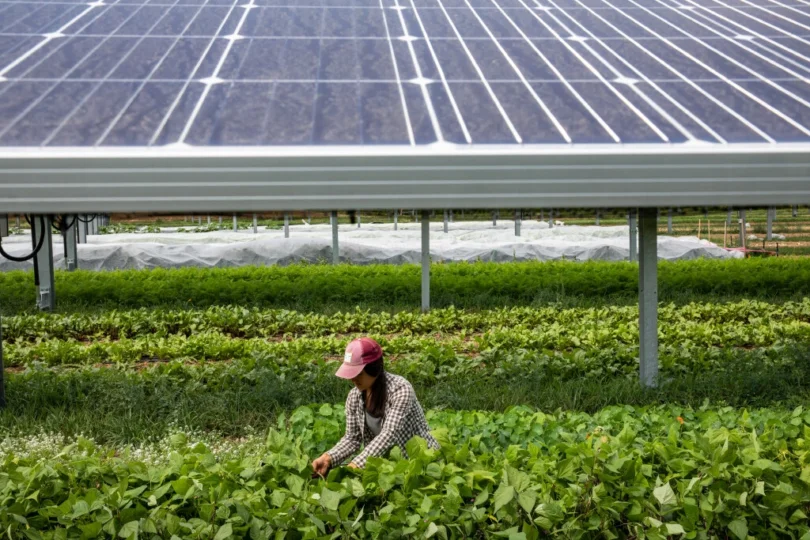
Agrivoltaics represents a land-use strategy that combines agricultural activities with photovoltaic solar energy production on the same piece of land. Instead of choosing between growing food or generating electricity, farmers can now do both simultaneously. The solar panels are typically mounted on elevated structures, usually between 10 to 15 feet high, which creates enough clearance for farming equipment to pass underneath and for crops to receive adequate sunlight. This dual-use approach transforms traditional farmland into multi-functional spaces that produce both kilowatts and calories.
The mechanics behind agrophotovoltaics are surprisingly straightforward yet scientifically sound. Solar panels capture sunlight and convert it into electricity while providing partial shade to the crops growing below. This shading effect actually benefits many plants by reducing heat stress and water evaporation from the soil. The vegetation underneath helps cool the panels through transpiration, which improves their electrical efficiency since solar panels work better at lower temperatures. This symbiotic relationship creates a microclimate that can be more favorable for certain crops than open-field conditions. Farmers can grow shade-tolerant crops like lettuce, spinach, tomatoes, peppers, and various herbs while also harvesting solar energy from the same plot.
The infrastructure for solar sharing systems varies depending on the specific agricultural application. Some installations use fixed-tilt panels mounted on sturdy poles, while others employ tracking systems that follow the sun’s movement throughout the day. The spacing between panel rows is carefully calculated to balance energy production with crop light requirements. Water management systems can be integrated to collect rainfall runoff from the panels for irrigation purposes. This thoughtful design ensures that neither the agricultural nor the energy production component compromises the other, creating a truly integrated farming system.
Benefits of Agrivoltaics for Farmers and the Environment
The advantages of implementing agrivoltaics on working farms extend far beyond simply having two income sources. Financial stability ranks high among the benefits, as the solar energy component provides predictable, long-term revenue through power purchase agreements or net metering arrangements. This steady income helps buffer farmers against volatile commodity prices and unpredictable weather patterns that can devastate crop yields. Many farmers report that the solar lease payments or electricity sales provide more reliable income than traditional farming alone, allowing them to invest in better equipment and sustainable practices.
Environmental benefits make dual-use solar particularly attractive for eco-conscious agricultural operations. The shade provided by elevated panels significantly reduces water consumption, with studies showing irrigation needs can drop by 20 to 40 percent compared to conventional farming. This water conservation becomes crucial in drought-prone regions where every drop counts. The panels also protect crops from hail, heavy rain, and extreme heat events that are becoming more frequent due to climate change. Soil health improves because the reduced evaporation maintains better moisture levels, and the panel structures minimize wind erosion.
Biodiversity often increases in agrivoltaic installations compared to traditional solar farms or monoculture fields. The partial shade creates diverse microhabitats that support different plant species, insects, and pollinators. Wildlife corridors can be maintained between panel rows, and the elevated structures provide shelter for birds and beneficial insects. Unlike conventional solar installations that cover the ground with gravel or limit vegetation to low-growing grass, agrophotovoltaics encourages rich vegetative growth that supports ecosystem health. This approach aligns with regenerative agriculture principles while still contributing to renewable energy targets.
Best Crops for Agrivoltaic Systems and Growing Tips
Selecting the right crops is crucial for successful agrivoltaic operations, as not all plants thrive under partial shade conditions. Leafy greens consistently perform well in these systems, with lettuce, spinach, kale, and Swiss chard showing excellent yields and often improved quality due to reduced heat stress. These crops prefer cooler conditions and protection from intense midday sun, making them ideal candidates for growing beneath solar arrays. The shade helps prevent bolting in lettuce and extends the growing season into warmer months when these crops typically struggle.
Soft fruits and vegetables also adapt beautifully to solar sharing environments. Tomatoes, peppers, cucumbers, and beans benefit from the moderated temperatures and wind protection provided by elevated panels. The reduced water stress allows these plants to allocate more energy toward fruit production rather than survival mechanisms. Berries including strawberries, raspberries, and blackberries flourish under agrivoltaic conditions, with the shade often improving fruit quality and shelf life. Herbs such as cilantro, parsley, basil, and mint appreciate the cooler microclimate and tend to produce more aromatic foliage when protected from harsh sunlight.
Root vegetables present another promising category for agrophotovoltaics. Carrots, beets, radishes, and turnips grow well in the diffused light conditions beneath panels. The consistent soil moisture helps these crops develop uniform roots without the cracking or bolting issues common in hot, dry conditions. When planning crop rotations, farmers should consider the light requirements of each plant and match them to the specific shading patterns created by their solar installation. Morning and evening light typically penetrates beneath the panels more effectively than midday sun, so positioning crops to maximize these periods can optimize growth.
Economic Considerations and Financial Models
Understanding the financial landscape of agrivoltaics helps farmers make informed decisions about adopting this technology. Initial capital requirements vary widely depending on system size, panel type, and infrastructure complexity. Many farmers choose to partner with solar developers who finance, install, and maintain the equipment while paying lease payments for land use. This arrangement eliminates upfront costs for the farmer while providing stable rental income, typically ranging from 300 to 700 dollars per acre annually. The farmer retains the ability to continue agricultural activities beneath the panels, essentially doubling the land’s earning potential.
Power purchase agreements offer another pathway for farmers to monetize solar sharing installations. In this model, the farmer or a cooperative owns the solar equipment and sells electricity to utilities or directly to consumers at predetermined rates. While this requires greater initial investment, the long-term returns can be substantial, with payback periods often ranging from 7 to 12 years depending on local electricity rates and incentives. Government programs including the Rural Energy for America Program and various state-level grants can offset installation costs significantly. Tax credits, accelerated depreciation, and renewable energy certificates add additional revenue streams that improve project economics.
Crop yield impacts must be factored into financial calculations, though research suggests minimal reduction for shade-tolerant species. Some farmers actually report increased yields per plant due to reduced stress, even if the total growing area is slightly reduced by panel infrastructure. The key is selecting high-value crops that command premium prices at farmers markets or through community supported agriculture programs. Organic certification becomes easier to maintain in agrivoltaic systems due to reduced pest pressure and improved growing conditions. Diversifying into agritourism by offering tours of the dual-use facility can create additional income while educating the public about sustainable farming practices.
Installation Types and Technical Specifications
Agrivoltaic systems come in several configurations, each suited to different farming operations and crop types. Elevated fixed-tilt systems represent the most common approach, with panels mounted 12 to 16 feet above ground level on robust steel or aluminum frameworks. This height accommodates standard farming equipment like tractors, harvesters, and sprayers while providing adequate clearance for tall crops. The tilt angle is optimized for local latitude to maximize energy production while considering the shading patterns cast on the underlying farmland. These systems work well for row crops, orchards, and pasture-based livestock operations.
Tracking systems add sophistication by following the sun’s path across the sky, increasing energy capture by 20 to 35 percent compared to fixed installations. Single-axis trackers move east to west throughout the day, while dual-axis systems also adjust for seasonal sun height changes. The dynamic shading created by tracking panels can actually benefit certain crops by distributing light more evenly than static shade. However, the moving components require more maintenance and create some operational complexity for farming activities. The increased energy production often justifies these trade-offs for operations prioritizing electricity generation.
Specialized designs address specific agricultural needs. Vertical bifacial panels installed in an east-west orientation allow maximum light penetration to crops while capturing sunlight on both sides of the panel. Greenhouse-integrated photovoltaics use semi-transparent solar cells as roofing materials, generating power while filtering light for protected cultivation. Floating solar systems on irrigation ponds reduce evaporation while producing clean energy. For livestock operations, ground-mounted panels at lower heights provide shelter for grazing animals while still generating electricity. Each configuration requires careful engineering to ensure structural integrity against wind and snow loads while maintaining agricultural functionality.
Challenges and Limitations to Consider
While agrivoltaics offers tremendous promise, farmers must navigate several challenges when implementing these systems. Upfront costs remain a significant barrier for many operations, even with available incentives and financing options. The specialized mounting structures required for elevated panels cost more than standard ground-mount systems, and agricultural equipment must sometimes be modified to work effectively beneath the infrastructure. Maintenance access requires careful planning, as technicians need to reach panels for cleaning and repairs without disrupting farming activities below. These coordination challenges can complicate daily operations and require new management approaches.
Crop selection limitations mean that not all farms are suitable for agrophotovoltaics. Sun-loving crops like corn, wheat, and soybeans generally do not perform well under partial shade conditions, ruling out these systems for many grain operations. The reduced light intensity beneath panels can slow growth rates for some species and may affect flavor development in certain fruits and vegetables. Pest management becomes more complex as the structures create sheltered environments that favor some insect populations while deterring others. Pollinator activity may decrease in heavily shaded areas, requiring farmers to select crop varieties that do not depend on insect pollination or to install supplemental pollination systems.
Regulatory and zoning issues can delay or prevent agrivoltaic projects in some jurisdictions. Local planning boards may classify these installations as industrial uses rather than agricultural, triggering different permitting requirements and tax treatments. Utility interconnection processes for grid-tied systems can be lengthy and expensive, particularly in rural areas with limited electrical infrastructure. Some agricultural preservation programs restrict solar development on protected farmland, though many are updating policies to explicitly allow agrivoltaics. Insurance considerations also arise, as standard farm policies may not cover solar equipment and specialized renewable energy coverage might not account for agricultural activities.
Real-World Success Stories and Case Studies
Across the globe, innovative farmers are proving that agrivoltaics works in practice, not just in theory. In Massachusetts, the University of Massachusetts Amherst established one of the first research-scale agrivoltaic installations in the United States, demonstrating successful cultivation of vegetables beneath elevated panels while generating significant electricity. Their findings showed that cherry tomatoes, peppers, and beans produced comparable yields to open-field cultivation while using substantially less water. This research facility has become a model for other universities and extension services developing best practices for solar sharing.
European farmers have embraced agrophotovoltaics with particular enthusiasm, especially in Germany and France where energy policies support renewable energy integration. A notable project in Germany combines sheep grazing with solar energy production, where the animals maintain vegetation beneath panels while providing additional farm income. The sheep benefit from the shade during hot summer months, reducing heat stress and improving weight gain. French wine growers have installed elevated panels over vineyards, protecting delicate grape clusters from sunburn and hail damage while producing clean energy. These viticulture systems demonstrate how agrivoltaics can enhance crop quality for high-value specialty products.
In Japan, where land scarcity drives innovation, farmers have developed sophisticated solar sharing systems for rice paddies and vegetable production. The government’s feed-in tariff program incentivized rapid adoption, creating thousands of dual-use installations across agricultural regions. These systems often incorporate automated tracking and smart irrigation that responds to real-time weather conditions. Australian ranchers have experimented with agrivoltaics for cattle operations, finding that cows seek shade beneath panels during extreme heat events, improving animal welfare and weight gain. These diverse applications demonstrate the adaptability of agrivoltaic concepts to different climates, crops, and farming traditions.
Future Trends and Technological Innovations
The agrivoltaics sector continues evolving rapidly as technology improves and adoption expands. Transparent and semi-transparent solar cells represent a breakthrough innovation, allowing more light to reach crops while still generating electricity. These advanced photovoltaic materials can be tuned to transmit specific wavelengths of light that plants need for photosynthesis while absorbing other wavelengths for energy production. Researchers are developing organic photovoltaics and perovskite cells that offer flexibility and transparency impossible with traditional silicon panels. These technologies could enable greenhouse-integrated systems that look like conventional glass structures while producing significant power.
Automation and robotics are transforming how farmers manage agrivoltaic installations. Specialized machinery designed to operate beneath elevated panels can plant, tend, and harvest crops with minimal labor input. Drones equipped with multispectral cameras monitor crop health and detect irrigation needs, while automated panel cleaning systems maintain energy production efficiency. Artificial intelligence algorithms optimize the angle of tracking panels to balance energy generation with crop light requirements throughout the day. These smart systems reduce the labor burden on farmers while maximizing both agricultural and energy outputs.
Policy developments are creating more favorable conditions for agrophotovoltaics expansion. Several states have enacted legislation specifically defining and incentivizing dual-use solar installations, distinguishing them from traditional ground-mount systems that displace agriculture. Research funding is increasing as governments recognize the potential for agrivoltaics to address food security and climate goals simultaneously. International organizations are developing certification standards and best practice guidelines to ensure that agrivoltaic installations truly benefit both energy production and farming. As climate change intensifies pressure on agricultural systems, the resilience benefits of farming under solar panels become increasingly valuable.
Getting Started with Agrivoltaics on Your Farm
Transitioning to agrivoltaics requires careful planning and strategic decision-making to ensure success. Start by assessing your specific site conditions including soil quality, water availability, existing infrastructure, and solar resource potential. Consult with agricultural extension services or universities conducting agrivoltaic research to understand which crops might thrive in your climate under partial shade. Evaluate your current farming operation to identify areas where dual-use solar could integrate smoothly without disrupting core activities. Consider starting with a small pilot project to gain experience before expanding to larger areas.
Finding the right partners proves crucial for successful implementation. Solar developers with agrivoltaic experience understand the unique requirements of farming operations and can design systems that accommodate your equipment and crop needs. Seek developers willing to collaborate on crop selection, panel height, and spacing decisions rather than imposing standard designs. Legal and financial advisors familiar with renewable energy projects can help structure agreements that protect your long-term interests. Connect with other farmers who have implemented agrivoltaics to learn from their experiences and avoid common pitfalls.
Financial planning should include multiple scenarios for crop yields, energy prices, and maintenance costs. Develop contingency plans for years when weather or market conditions affect either the agricultural or energy components of your operation. Consider forming cooperatives with neighboring farmers to share costs and negotiate better terms with developers or utilities. Explore value-added opportunities such as agritourism, educational tours, or direct marketing of agrivoltaic-grown produce to capture premium prices. Document your experiences to contribute to the growing knowledge base about best practices for farming under solar panels.
Frequently Asked Questions (FAQ)
Curious about how agrivoltaics might work for your specific situation? You are not alone. Thousands of farmers and landowners are exploring this innovative approach to land use, and certain questions come up repeatedly. Whether you are wondering about crop compatibility, financial returns, or practical implementation details, getting clear answers helps you make informed decisions. The following questions address the most common concerns people have when considering whether to integrate solar energy production with their agricultural operations. Understanding these fundamentals will help you evaluate if agrivoltaics aligns with your farming goals and land management strategies.
1. What crops grow best under solar panels?
Leafy greens like lettuce, spinach, and kale consistently perform excellently in agrivoltaic systems due to their preference for cooler, shaded conditions. Soft fruits including tomatoes, peppers, and berries also thrive, often producing higher quality fruit with better shelf life. Root vegetables such as carrots, beets, and radishes adapt well to the diffused light beneath panels. Herbs including basil, cilantro, and parsley appreciate the moderated temperatures. The key is selecting crops that naturally prefer partial shade or cooler growing conditions rather than those requiring full, intense sunlight.
2. How much do agrivoltaic systems cost to install?
Installation costs vary widely based on system size, panel type, mounting structure height, and local labor rates. Elevated systems typically cost 15 to 30 percent more than standard ground-mount installations due to the specialized infrastructure required. However, many farmers partner with solar developers who finance the entire project in exchange for lease payments or power purchase agreements. Government incentives, tax credits, and grants can significantly reduce out-of-pocket expenses for farmers who choose to own their systems. Most farmers find that the long-term financial benefits outweigh the initial investment costs.
3. Do solar panels affect crop yields?
Research indicates that shade-tolerant crops often maintain or even exceed standard yields in agrivoltaic systems due to reduced heat and water stress. The microclimate created beneath panels can extend growing seasons and improve crop quality. However, sun-loving crops like corn and wheat typically show yield reductions and are not suitable for these systems. Proper crop selection and panel spacing are essential to minimize negative impacts on agricultural production. Many farmers report that the combined income from crops and electricity exceeds what they earned from farming alone.
4. Can livestock graze under solar panels?
Yes, grazing animals work exceptionally well in agrivoltaic systems, with sheep being the most common choice due to their size and grazing behavior. The panels provide shade that reduces heat stress during hot weather, improving animal welfare and weight gain. Sheep naturally control vegetation growth, reducing maintenance costs for the solar installation. Cattle can also graze beneath elevated panels, though the infrastructure must be designed to accommodate their size and strength. The combination of livestock and solar energy creates a true multi-use system that maximizes land productivity.
5. How tall are the solar panels in agrivoltaic systems?
Most agrivoltaic installations mount panels 10 to 16 feet above ground level to accommodate standard farming equipment and tall crops. The specific height depends on the crops being grown and the machinery used for cultivation, planting, and harvest. Some systems designed for livestock or low-growing crops use lower heights of 8 to 10 feet, while others reach 20 feet to accommodate orchard equipment or large tractors. The elevation must balance agricultural functionality with structural costs and wind load considerations.
6. Are there government incentives for agrivoltaics?
Various federal, state, and local programs support agrivoltaic development through grants, tax credits, and favorable regulatory treatment. The Rural Energy for America Program offers grants and guaranteed loans for renewable energy systems on agricultural operations. Many states include agrivoltaics in their renewable portfolio standards or offer additional incentives for dual-use systems. Some jurisdictions provide property tax exemptions or reduced assessments for agricultural land with solar installations. Farmers should consult with local extension services and renewable energy agencies to identify available programs in their area.
Embracing the Future of Sustainable Farming
Agrivoltaics: farming under solar panels represents a powerful solution for modern agriculture’s most pressing challenges. As climate change intensifies and farmland becomes increasingly scarce, the ability to produce food and clean energy on the same plot offers a path toward true sustainability. Farmers who adopt this approach gain financial resilience through diversified income streams while contributing to environmental stewardship. The technology has matured beyond experimental stages into proven systems that work across diverse climates and crop types. Whether you manage a small vegetable operation or a large-scale ranch, exploring how agrivoltaics might fit your farm could lead to exciting new opportunities. The future of agriculture lies not in choosing between food and energy production, but in cleverly combining them to create systems that are more productive, profitable, and sustainable than either could achieve alone.